


When a CNN anchor asks a question about tariffs, she doesn’t usually get a marriage proposal in response. But that’s the best metaphor I have for what Trump is doing to Canada, so that’s the one I used. Thanks to Kate Bolduan for rolling with me on this one.
Trump is threatening Canada with 50% tariffs on a wide range of items, including — and this is the important bit — stuff that he had already agreed not to tariff as part of the USMCA, the free trade agreement that he negotiated with Canada.
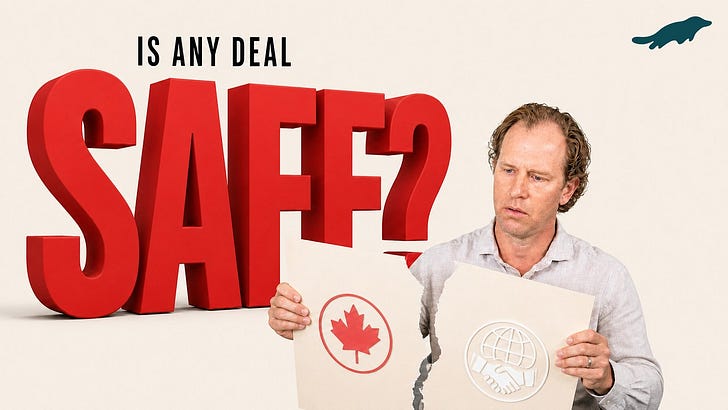
If you need a primer on the details, we’ve dug into this one before:
The issue is back in the spotlight as the president is engaged in a will-he-or-won’t-he moment on whether he’s actually going to impose these tariffs.
The question everyone keeps asking is whether all this pressure will win us a better trade deal.
The marriage question
The problem, of course, is that we already have a free trade deal with Canada.
Which is where the marriage comes in.
Wedding vows are, in their essence, trade agreements. Stick with me, I’m serious.
For many couples, a wedding is the moment they form a household together. At their most mundane, these deals are about trading chores and obligations, and making investments together (in a dining room table, for instance). Most of these “trade agreements” are more far-reaching, and provide the secure foundation for couples to enjoy the dance of love and sex and children.
The standard script of wedding vows includes a commitment to work together “for better, for worse, for richer, for poorer, in sickness and in health, till death do us part.”
Our existing free trade agreement with Canada says the same thing, though less eloquently.
Now let’s try to get to the question of whether constant threats might win President Trump a better trade deal with Canada.
If I proposed to you, you’d want to know something about my history. So suppose I told you I’d been married seven times, and that I’d cheated on all seven wives. And then I asked you to marry me anyway.
If I had breached that agreement with seven past spouses, I reckon you wouldn’t trust me to live up to it the eighth time. And so even as we might say the words “in sickness and in health” at some flashy ceremony, I’m not sure it buys us anything. The reality is, you don’t think I’m going to live up to this “trade agreement,” so you don’t feel any obligation to do so either.
That’s where we are with Canada, and it’s the thing people miss when they talk about leverage. A threat doesn’t widen the range of deals available to you. It narrows it. Every arrangement that would require Canada to trust us for years running is now off the table, because we’ve shown ourselves to be an unreliable partner.
The best we can do is make a “deal” — the scare quotes are real — that is shallow, transactional, and not really binding.
To return to the economics of this, if you were a Canadian auto parts manufacturer, would you feel secure enough in your relationships with your American counterparts to build a factory near the US-Canadian border as part of deepening your relationship with General Motors?
Consent matters
There’s an important second part to this analysis.
The president declared early on that he wanted Canada to be the 51st state, whether they wanted it or not. He’s not especially interested in his partner’s consent. That is a terrible way to begin a relationship.
Healthy partnerships demand vulnerability, but vulnerability requires trust. If a partner refuses to respect your boundaries or care about consent, trust evaporates, and without trust, genuine cooperation becomes impossible.
It’s not just a Canada problem
The United States has a free trade agreement with Canada. Reneging on it hurts our relationship with Canada. It seems implausible that this round of negotiations is going to lead to a lasting, closer relationship. That hurts folks on both sides of the border.
The damage is more far-reaching. President Trump’s inability to commit, and his indifference to consent, seem not to be a huge story in the United States (there’s so much going on!). But it’s front-page news around the world.
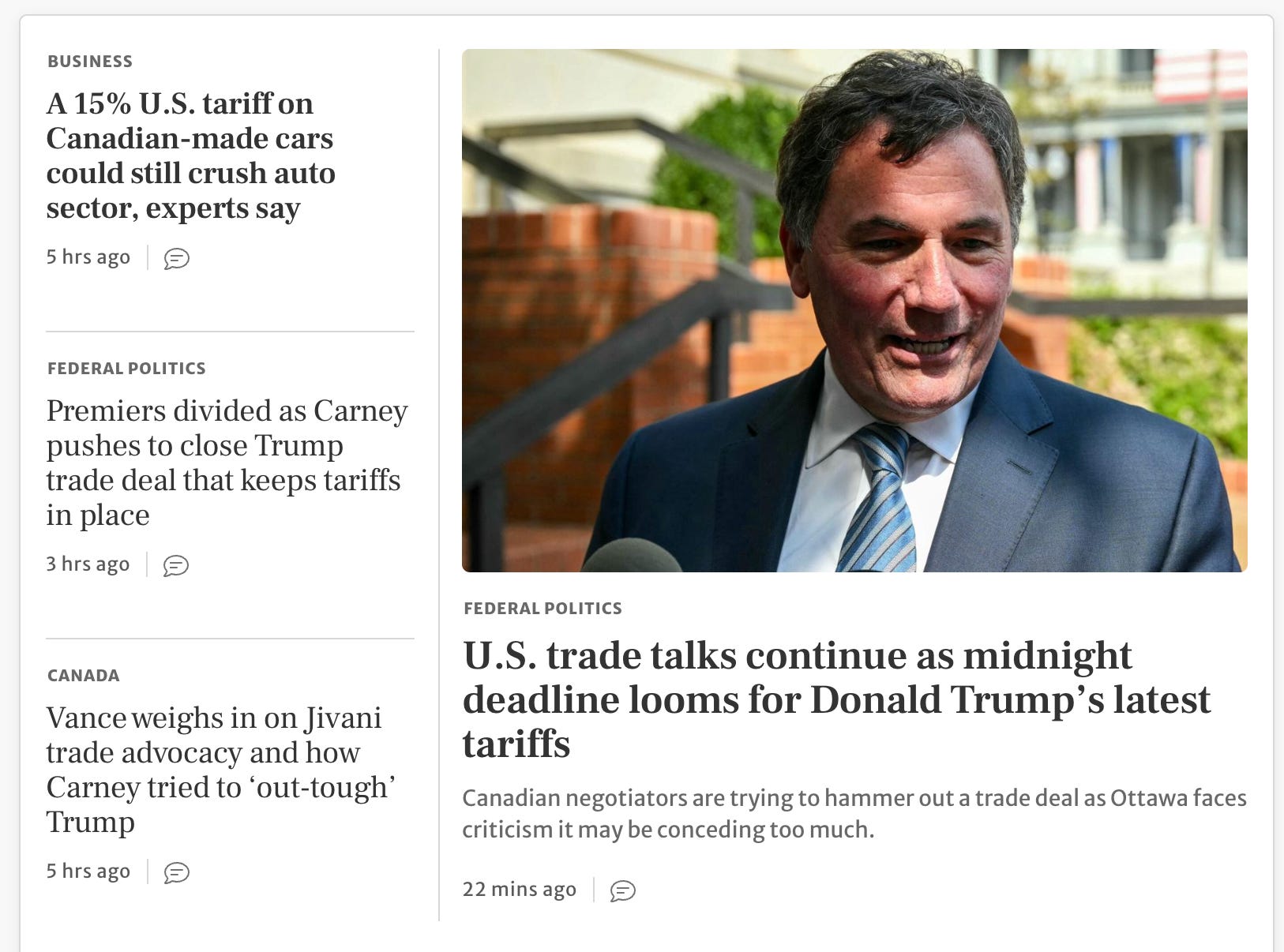
The rest of the world has noticed that it’s impossible to trust the United States on trade. Without trust, the range of what’s possible narrows. That doesn’t just mean with Canada, but also with every other country that has observed that the United States regards its commitments as optional.
And perhaps this explains how we can be a year and a half into Trump’s trade war, and we have yet to see a single trade deal that involves lasting and valuable commitments.
Fortunately for Canada, they have a very smart PM in Carney, who demonstrated with his Davos speech that he understands the threat Trump poses to Canada and also to world stability.
Yep. You nailed it.