


The latest inflation report is out, and the news was better than expected.
Headline inflation was down 0.4% for the month — the steepest one-month drop since April 2020 and the earliest days of COVID. Meanwhile, the year-over-year rate was +3.5%, down from +4.2% in May.
If you’re going to tell me that you don’t believe that prices fell last month, I get it. What really happened is that most prices rose, but a small set of prices — yes, energy prices — fell 5.7% for the month.
The numbers for core inflation (stripping out the more volatile energy and food prices) also provided good news. The monthly index was flat, while the year-over-year figure was +2.6% (down from +2.8% in May).
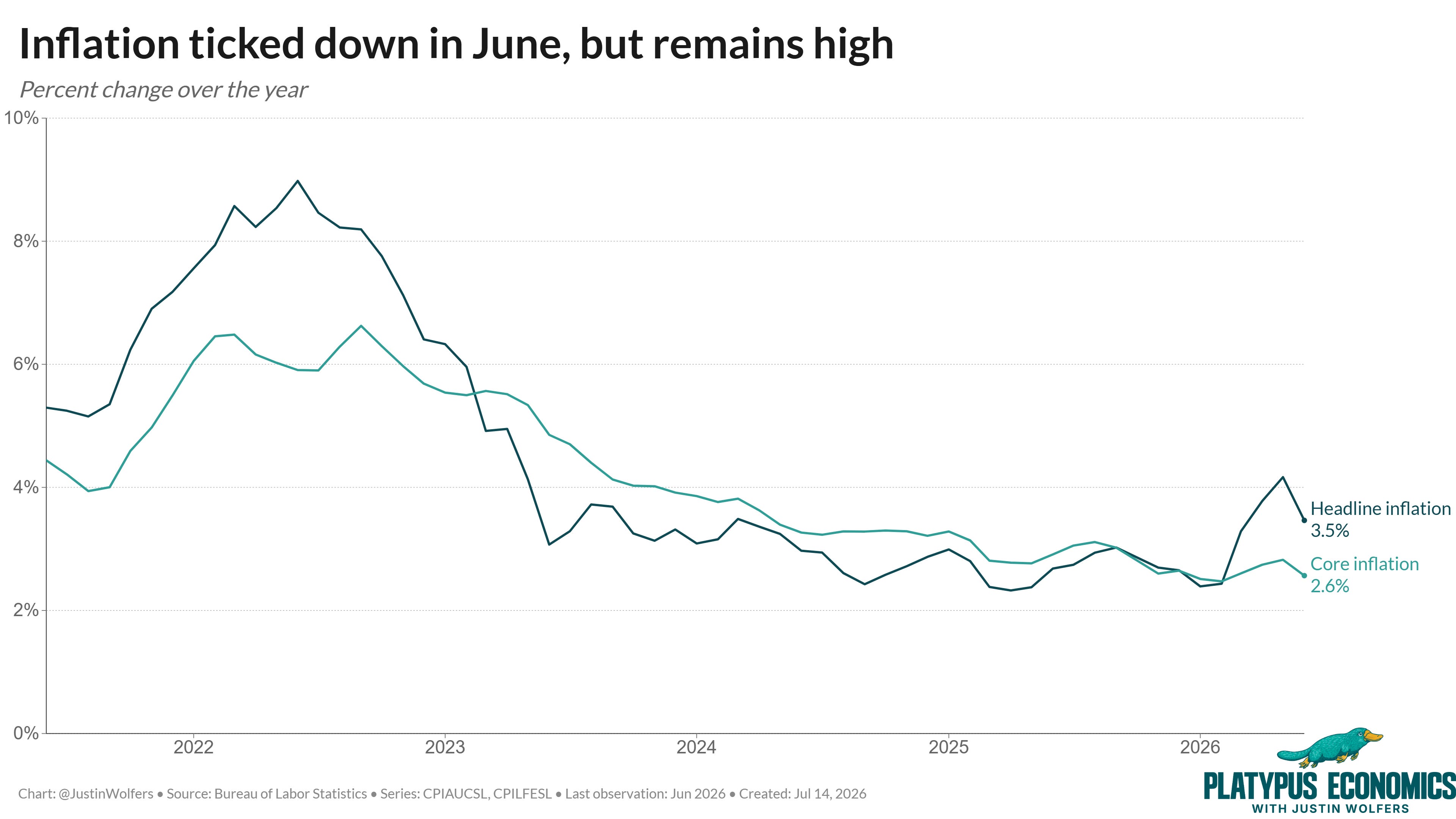
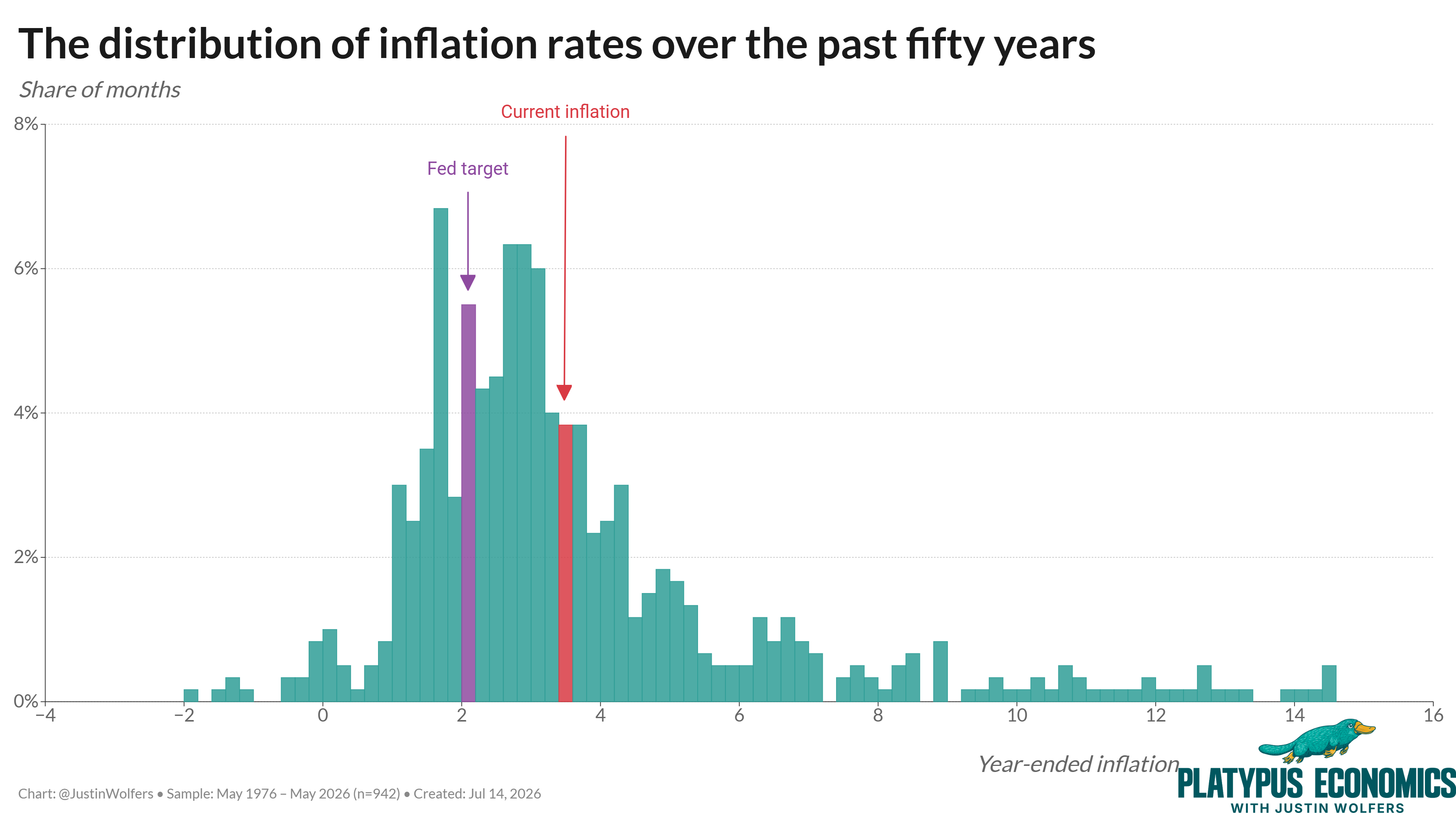
Nevertheless, these numbers remain high by historical standards, and still well above the Fed’s target rate of 2%.
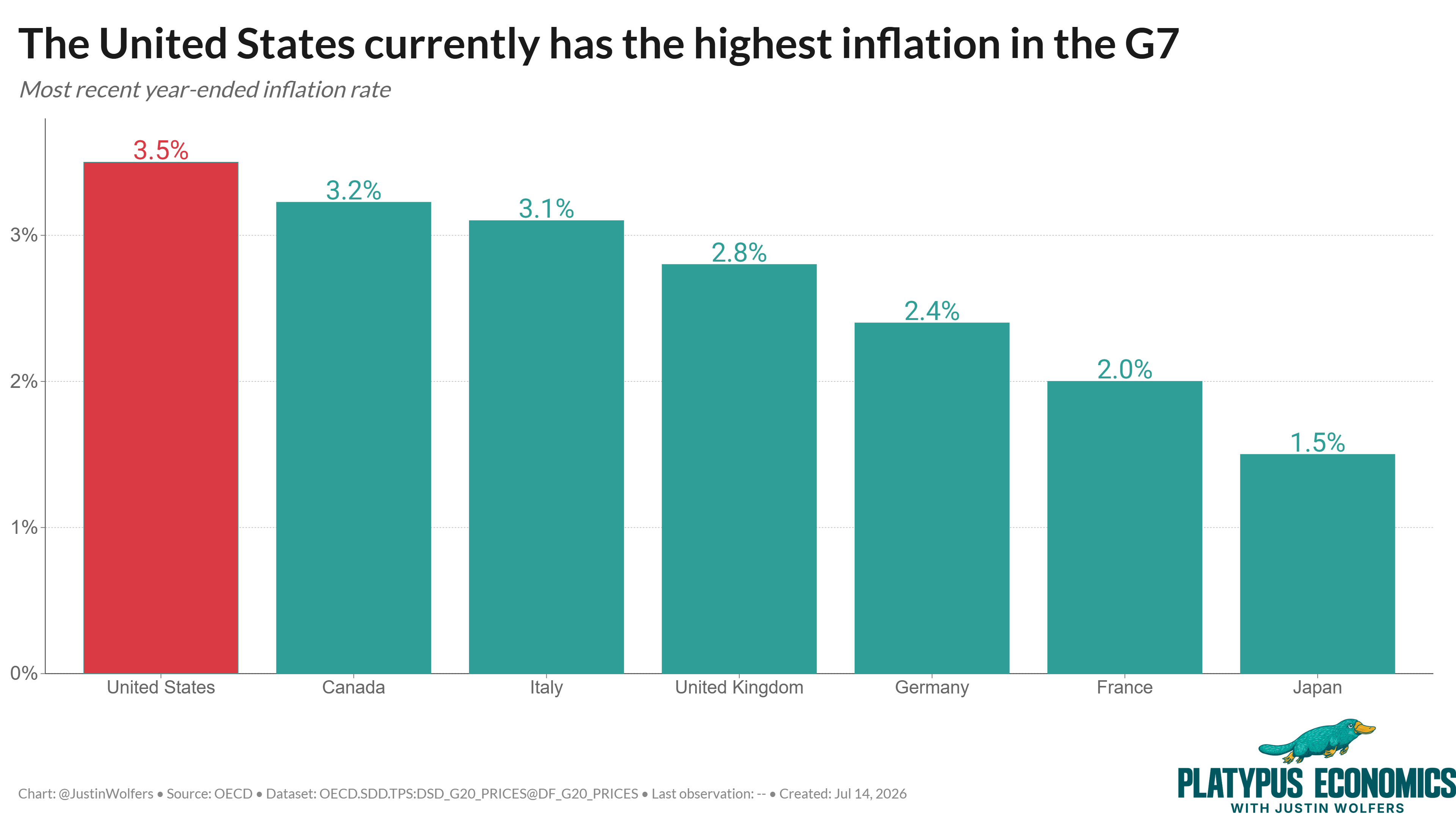
U.S. inflation also outpaces each of our G7 peers, suggesting that the current inflationary burst isn’t just caused by global forces like surging energy prices. (Ahem, tariffs would like some attention.)
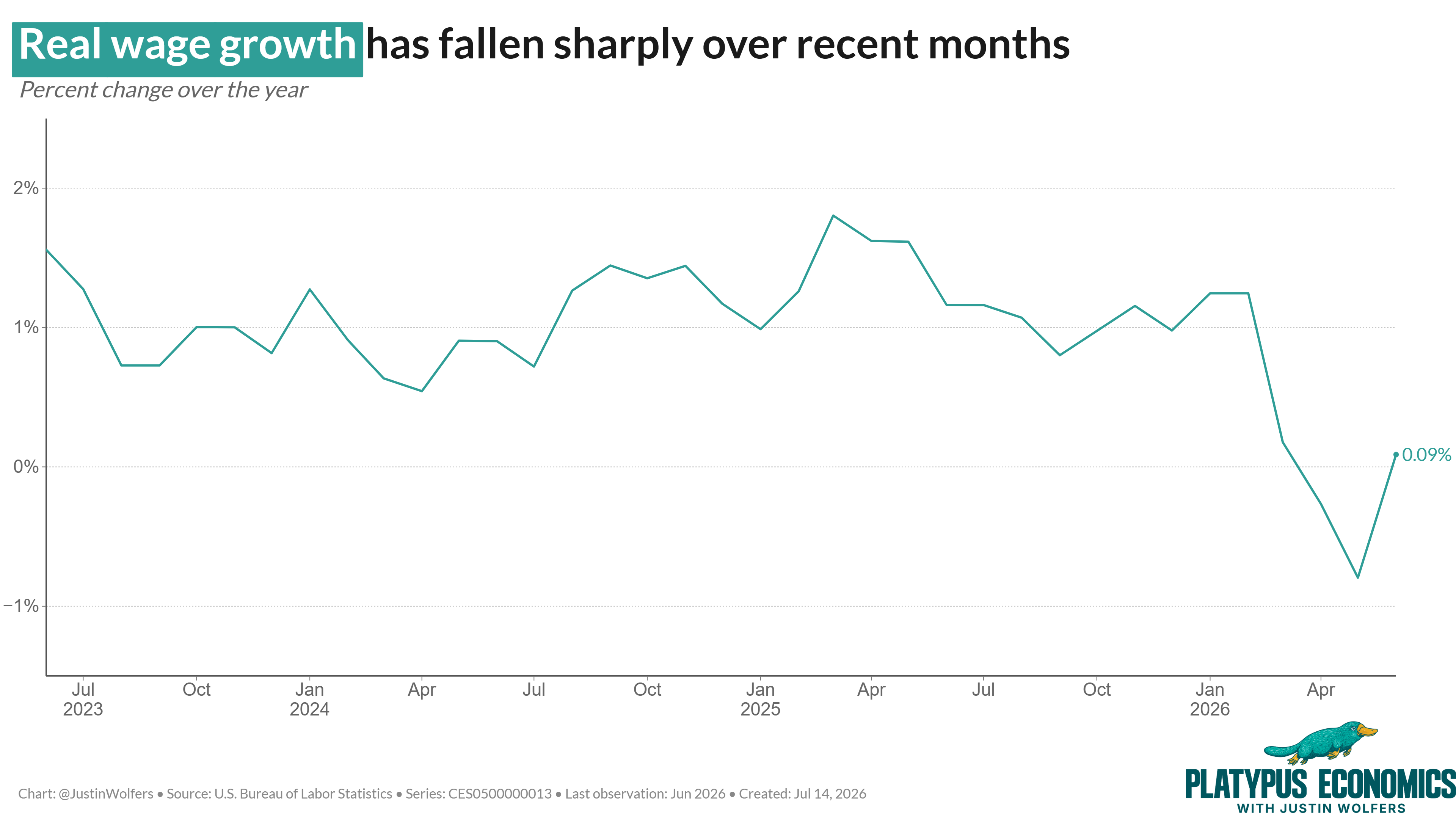
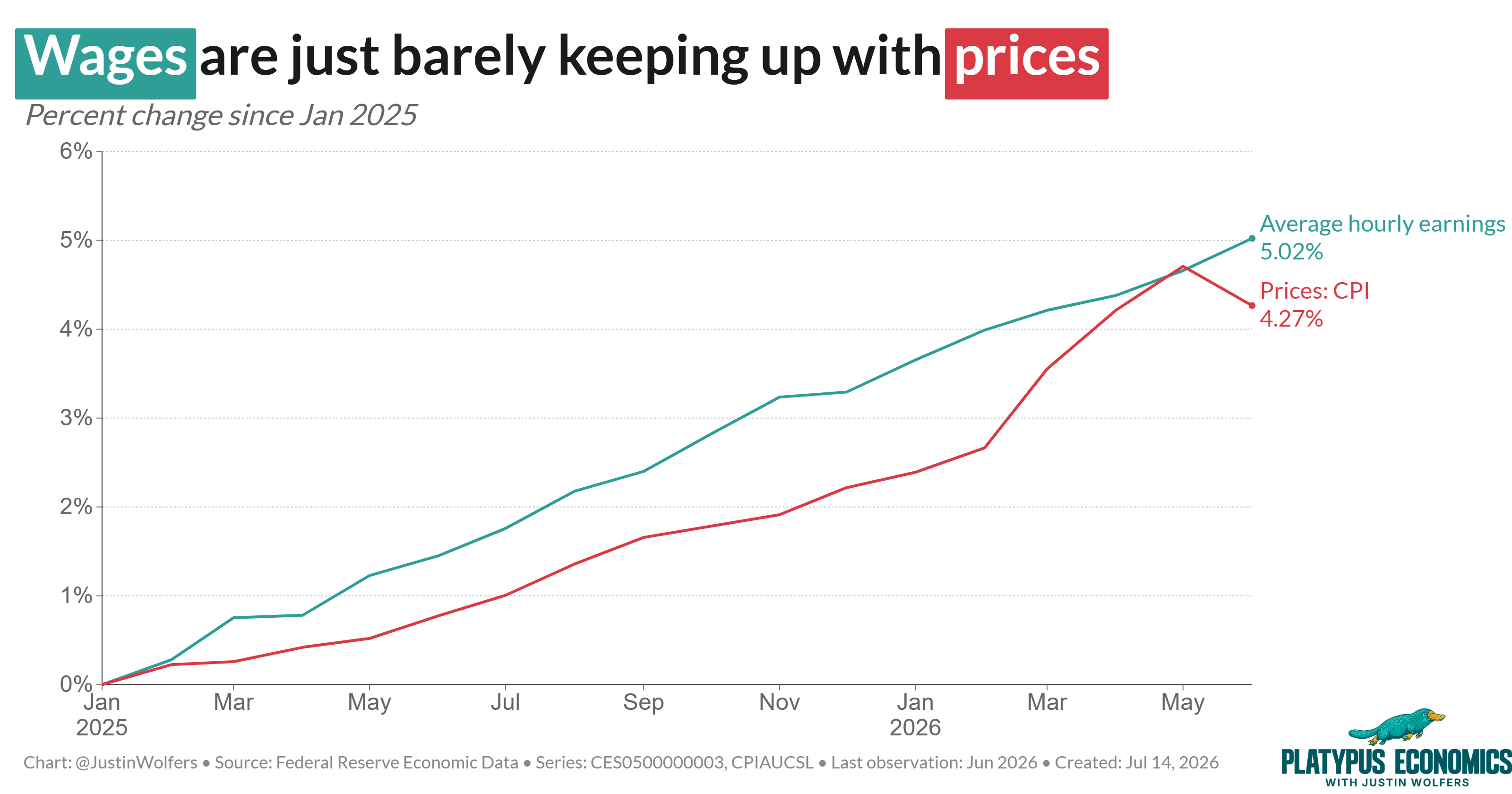
When it comes to purchasing power, real wage growth has fallen sharply over recent months, and real wages barely grew over the past year. At least we got a bit of a rebound from May when real wages actually declined.
Zooming out to consider Trump’s entire second term, we see that average hourly earnings are barely outpacing inflation.
This report also has important implications for the Fed.
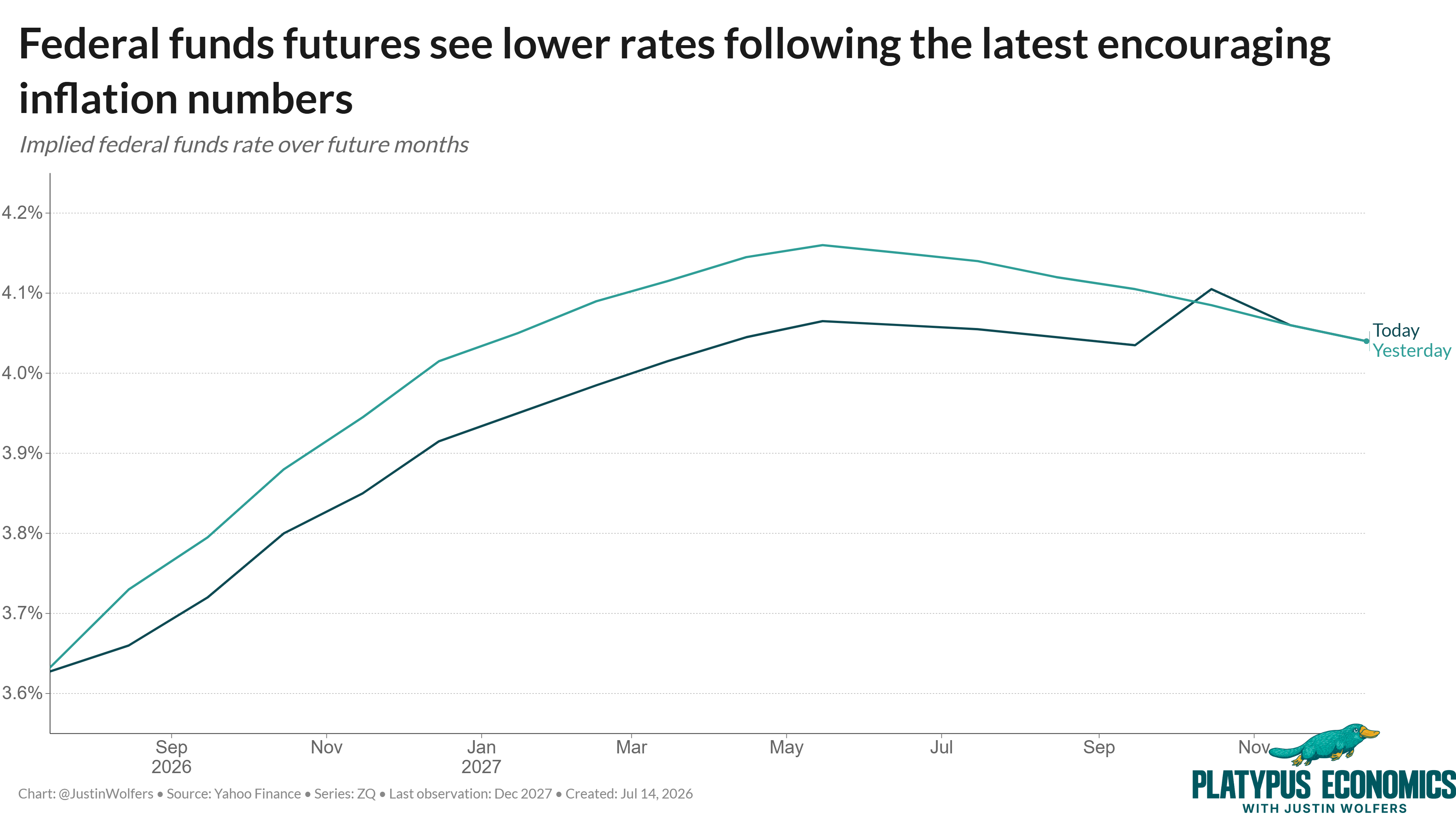
Today, most economists are breathing a sigh of relief that inflation is less of a threat than we might have thought as recently as last night. As a result, federal funds futures now predict lower interest rates through the end of the year. Yes, rate hikes are still more likely than a rate cut, but they may be later, and there may be fewer of them.
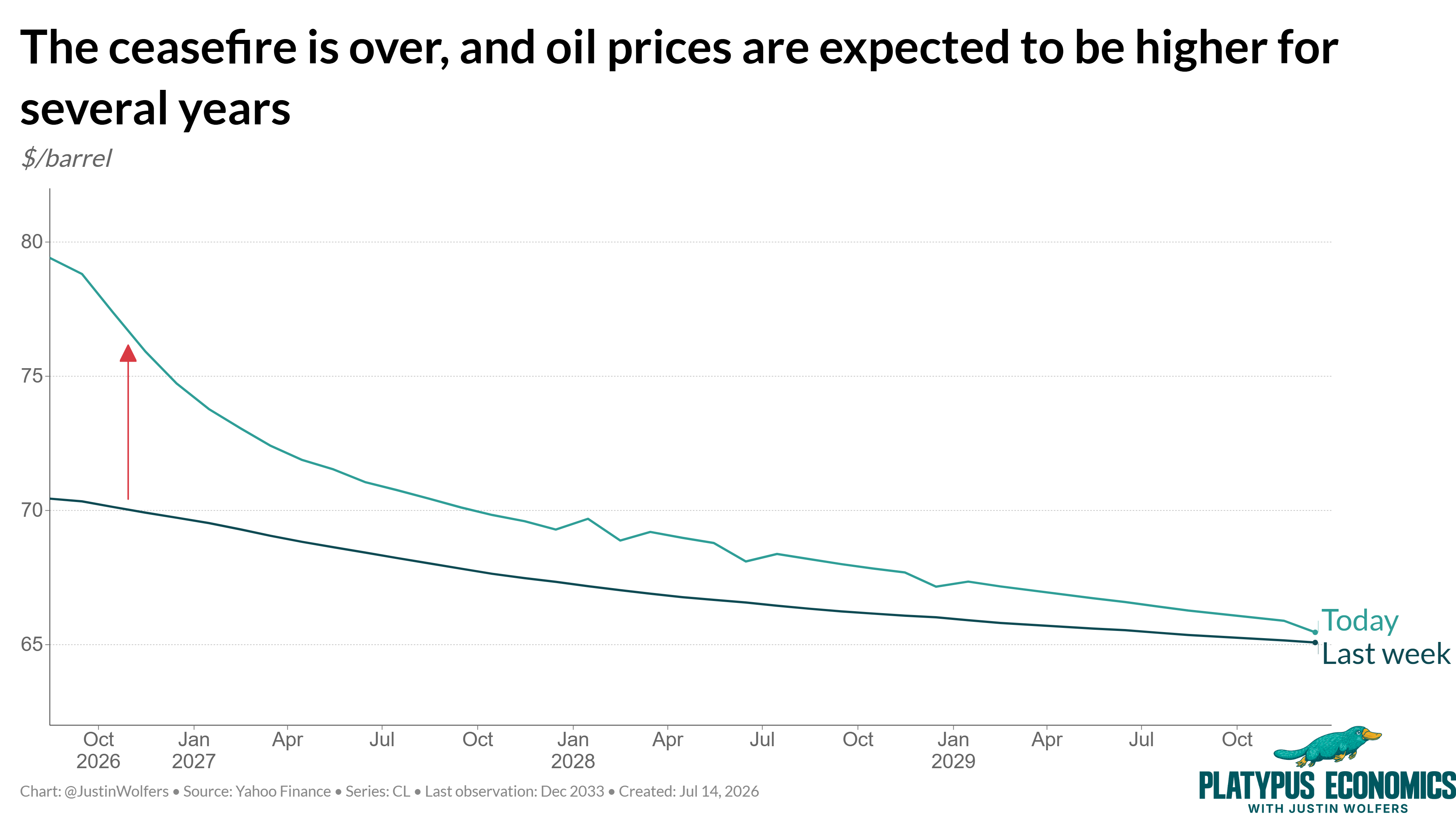
But… this report tells us about June, and we’re now in July, and we already know of some unwelcome developments in the fight against inflation. The recent collapse of the Iran ceasefire is a big deal for a lot of reasons, including inflation. It’s a simple rule: More war, higher energy prices.
And indeed developments over the past few days have led oil futures markets to move sharply, and they’re predicting higher energy prices for the next several years. So this month’s relief about lower headline inflation — due to cheaper energy — will likely be short lived.
Finally, a question. What are you seeing in your community? How is inflation affecting the issues you’re discussing at work? What are the companies that you work with doing, and how is the current energy crisis working itself out on the shop floor?


