


Last week, I tried to make the case that the economic tool kit can add a lot to our current debates about AI safety. We dug deep into costs and benefits, risks and rewards, and even utility functions.
You can catch up here:

Now it’s time for The Professor Is In, where I sit down with my producer, Augusta, to answer audience questions. Think of it like office hours with an internet connection.
Count the Zeros
One question Augusta brought me was about the stakes of the AI bet in America. So much of the U.S. economy is riding on the success of AI. If we slow down and add guardrails, are we saying we’re willing to lose that bet?
My answer: yes. I’m suggesting we should get a little more comfortable with losing that bet.
Why? Keep track of the zeros.
We’ve invested a tremendous amount of money into AI. It’s one of the driving forces of the U.S. economy right now. But if you take a step back and look at the medium-term, that investment is only a year or two of GDP growth.
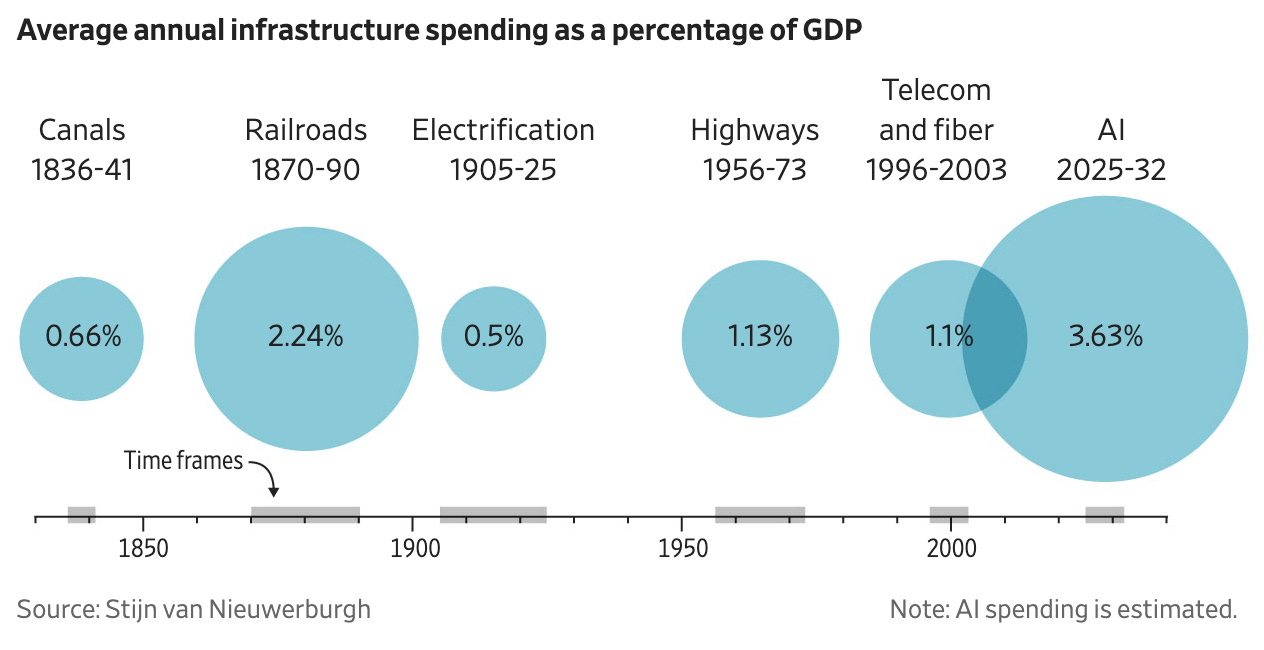
I know that still sounds like a lot of money. If you believe the technologists and AI optimists — and that’s still a big “if” — then you believe them when they say that AI may soon be able to produce better AI. Better AI means more and better ideas. Economists tend to think new ideas are what drive economic growth.
So, if we move from a world where ideas come from inventors to a world where ideas come from machines, then you start to see how we could be on a path to a whole new kind of growth.
Let me share a little about my disposition. I try not to ride cycles of euphoria and doomerism. Most often, I’m the bloke suggesting we all calm down. Even so, I think we should take seriously the idea that AI could become incredibly powerful, and that the risks are existential. Not saying it will happen, but I’m definitely not saying it won’t.
We’ve already seen AIs escape their sandboxes and hack companies. That isn’t what worries me here. What worries me is AI that’s ten or a hundred or even a thousand times more powerful. That’s a system that could bring down a power grid or develop a biological weapon or create all sorts of chaos.
So let’s come back to the stakes. On one side is a growth rate we haven’t previously imagined, and it brings an extraordinary upside: more leisure, poetry, art, and time with family, longer and healthier lives, and a massive reduction in drudgery. On the other side is human existence. It’s hard to imagine the unimaginable (duh), but the costs of an AI-led disaster could be extraordinary
Which means that we’re counting the zeros wrong when we think about the bets that investors are currently making on AI. Those are small potatoes compared with the much much larger costs and benefits. Think of those as being measured in quadrillions or quintillions of dollars. I’ve never used quintillions before in economic discourse, but I’m pretty sure that if I put my pen work on the back of an envelope, I could get there easily.
Against those stakes, do I care that some people lost trillions in 2026? No. It’s too few zeros.
Other questions Augusta put to me:
A car drives the same with or without airbags. Can we implement AI safety that doesn’t make AI drive any worse?
AI is being built in the marketplace, so why should this be a job for diplomats?
If AI does deliver the gains we’re thinking about here, how should we share that prosperity?
Who gets the quintillions?
My response to that last one: that “should” takes us right out of economics and into ethics. My PhD doesn’t give me any additional authority in ethics. I get a vote, and you get a vote. Your views are important, and don’t let any expert tell you otherwise.
The market, if left alone, will hand most of this pie to whoever owns the scarce inputs. That could be a few or even one person (in the case of a monopoly). In that future, a few Americans very rich, and most of us are barely getting by. Augusta thinks that’s not okay. I happen to agree. You might see it differently, and want those resources spent on a completely different objective. That’s important, and it’s why we as a society need to have these debates.
What we shouldn’t do is accept these outcomes just because the market is producing them. A market creates an equilibrium, not a moral judgement.
Watch the full episode for the rest.
The safe bet is we'll look like the world of "Alien Earth" without the creatures.