


We don’t know how long the current ceasefire in Iran will hold, and it’s looking shakier by the day. But whether war reignites or we manage to negotiate a durable peace, it would be a mistake to think the costs are also behind us.
Yes, oil prices may come down, but broken infrastructure stays broken. Fear fades, but uncertainty lingers. Weaknesses that were hidden are now visible, and once governments start writing bigger checks to their defense departments, those numbers have a nasty habit of sticking around.
I can’t pretend to foresee every cost that will result from this American incursion into Iran. The full costs of war tend to show up months, years, even decades after the last bullet is fired — often in unexpected ways. But the ones I can tell you about are reason enough to worry.
What markets are telling us
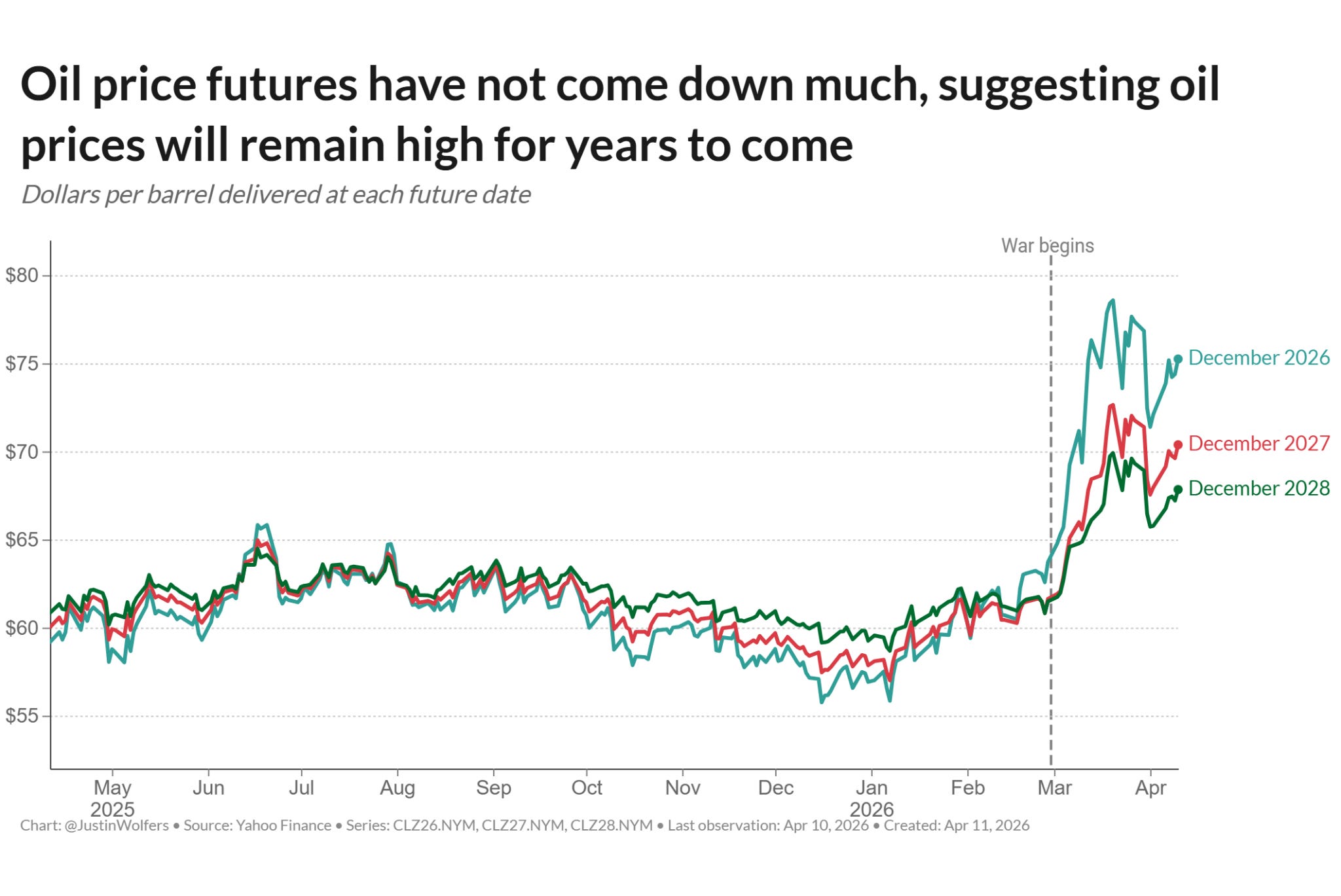
Let’s start with oil. Yes, spot prices have fallen from their wartime peak, but that only tells us about the present moment. Futures prices tell us what markets think lies ahead.
And according to futures markets, oil that is to be delivered at the end of 2026 is still priced substantially higher than it was before the war. The same goes for oil delivered at the end of 2027 and 2028. In other words, the whole futures curve has shifted up.
Now, this curve is what the markets think will happen. Markets are not always right, but they’re usually less wrong than pundits. And right now, they’re telling us that the war has changed expectations about global oil prices for the next year, the year after, and the year after that. And since oil is a global market, Americans will pay the global price.
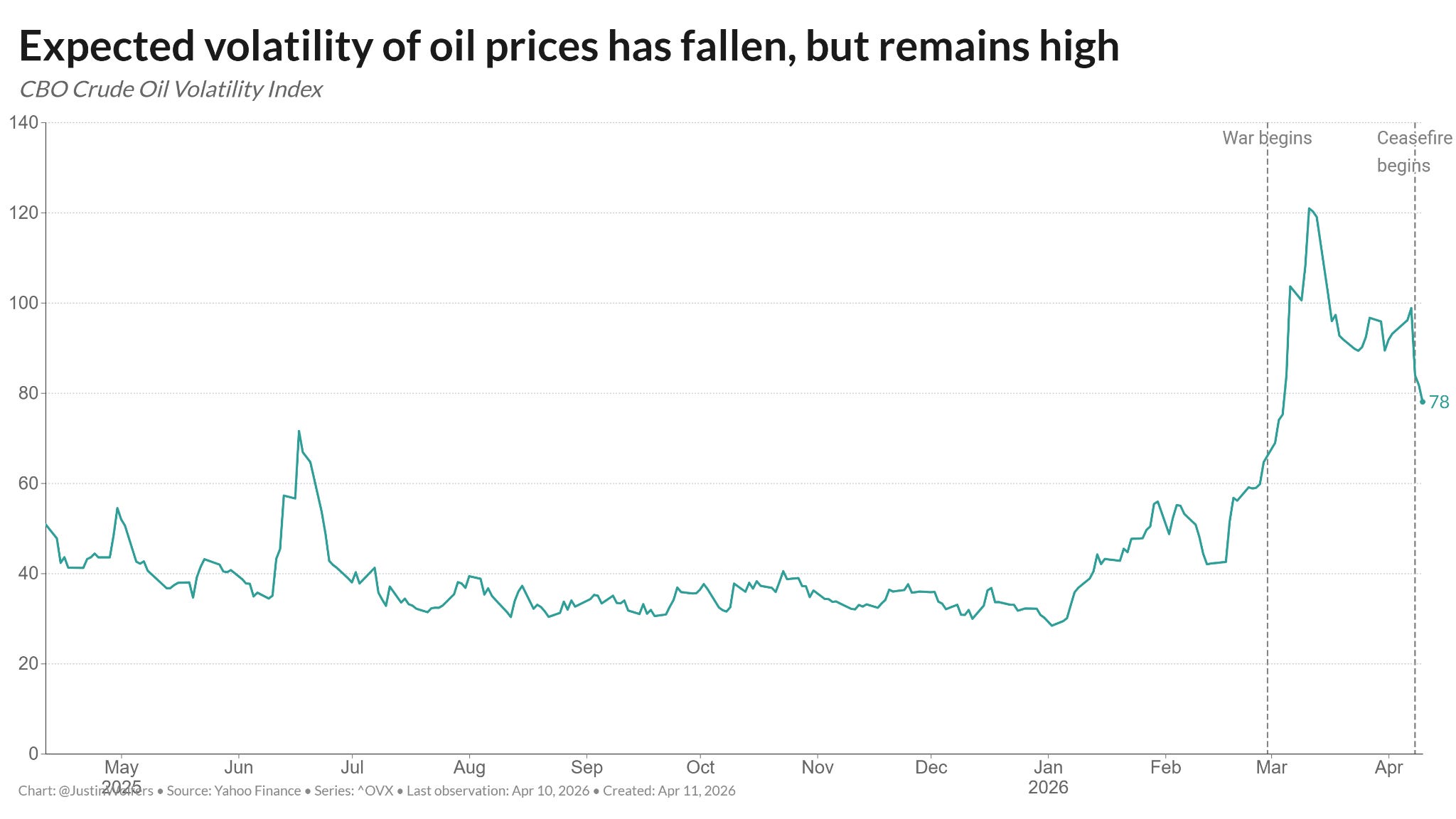
There’s a second market signal that’s just as telling. Expected oil price volatility spiked when the war began. It’s come down since the ceasefire, but it’s still well above where it was before March. The same goes for US economic policy uncertainty.
All this uncertainty leads people to protect themselves. They delay investment and hiring, hold more cash, buy more insurance, and build in buffers. These are all sensible decisions, but none of them free.
The damage that doesn’t unwind quickly
We can also look beyond financial markets to concrete reality.
Many things — mostly in the Middle East — are physically broken. Repeated strikes hit major energy infrastructure in Iran and throughout the region. In Qatar, missile strikes on Ras Laffan Industrial City reportedly knocked out one sixth of the country’s liquid natural gas export capacity, with repairs expected to take three to five years.
Damage estimates and repair timelines change — they tend to be particularly unreliable during the fog of wartime. But peace cannot instantly restore structural damage. And the effects of this will reverberate well beyond the Gulf.
There is also a strategic cost. This war revealed that the United States remains deeply dependent on supply chains and choke points we do not control. A disruption in the Strait of Hormuz can affect fuel costs, shipping, and inflation. And its geographic reality allows Iran to hold a huge share of the global economy hostage.
What’s more is that once a country demonstrates its willingness to use this kind of leverage, the leverage itself becomes more valuable. We saw a similar story play out during the trade war with China and rare earth minerals. The moment China demonstrated it held the cards when it came to manufacturing chips and cars, everyone had to start taking their threat to hold these minerals hostage more seriously.
And now that the lesson has been learned, the bargaining changes. Iran has proposed charging a $1-per-barrel toll on transit through the Strait of Hormuz. The good news for Americans is that the direct price hit is relatively small. A buck per barrel should raise the price of gas by about one or two percent — roughly a nickel per gallon. The real story is that this leverage turns into revenue for our adversaries.
It’s a small tax, but applied to a very large volume of global trade it adds up to a sizable boost for Iran’s military budget. We can either accept this loss of geopolitical power or spend a ton of money trying to work our way around it. Either way, it adds up to a hefty bill that will ultimately be paid for by the American taxpayer.
There’s also a weird, cruel irony here. If the Iranians follow through on imposing this toll, they’ve effectively passed a carbon tax. Americans will pay a bit more for oil, gasoline, jet fuel and so on, and probably cut back a bit as a result. Which means a Republican president has imposed a carbon tax that’s generating revenue for Tehran instead of D.C.
The costs looming on the horizon
There are two additional costs that haven’t arrived quite yet. But once they do, they’re likely to linger.
First, the war creates a real headache for the Federal Reserve. That’s because it’s generated a supply shock, which simultaneously pushes prices up and slows the economy down. Unfortunately, there is no good answer for tackling both of these problems at once.
In general, if an economy looked weaker due to an external shock, the Fed would consider cutting interest rates to cushion the blow. But if that same shock is pushing inflation higher — here, through energy and shipping prices — cutting rates risks pouring gasoline on the fire.
And the Fed is not just concerned about today’s inflation, but also about tomorrow’s inflation expectations. If Americans believe inflation will stay high, that can lead workers to demand higher wages, which leads firms to expect higher costs and raise prices even more. They’ll also expect their rivals to boost prices, which reduces the competitive pressure that otherwise helps keep inflation in check. So the expectation of higher inflation can itself create the reality of higher inflation.
The final cost to consider is that of the defense budget. Right now, it’s a pretty good bet that Iran will make military spending a priority, and other nations in the region will as well. And the more idiosyncratically the United States behaves, the more other nations — including our friends in Europe — will consider increasing their defense budgets. And if everyone else is spending more on defense, the United States will have to join them if we want to maintain military dominance.
Already, the administration has proposed $1.5 trillion in defense spending for fiscal year 2027 — roughly a 50% (or $500 billion) increase compared to last year. If Congress gives their approval, that money has to come from somewhere, either through higher taxes or cuts elsewhere in the budget. Borrowing is not a third option — that’s just another word for future tax hikes or future cuts.
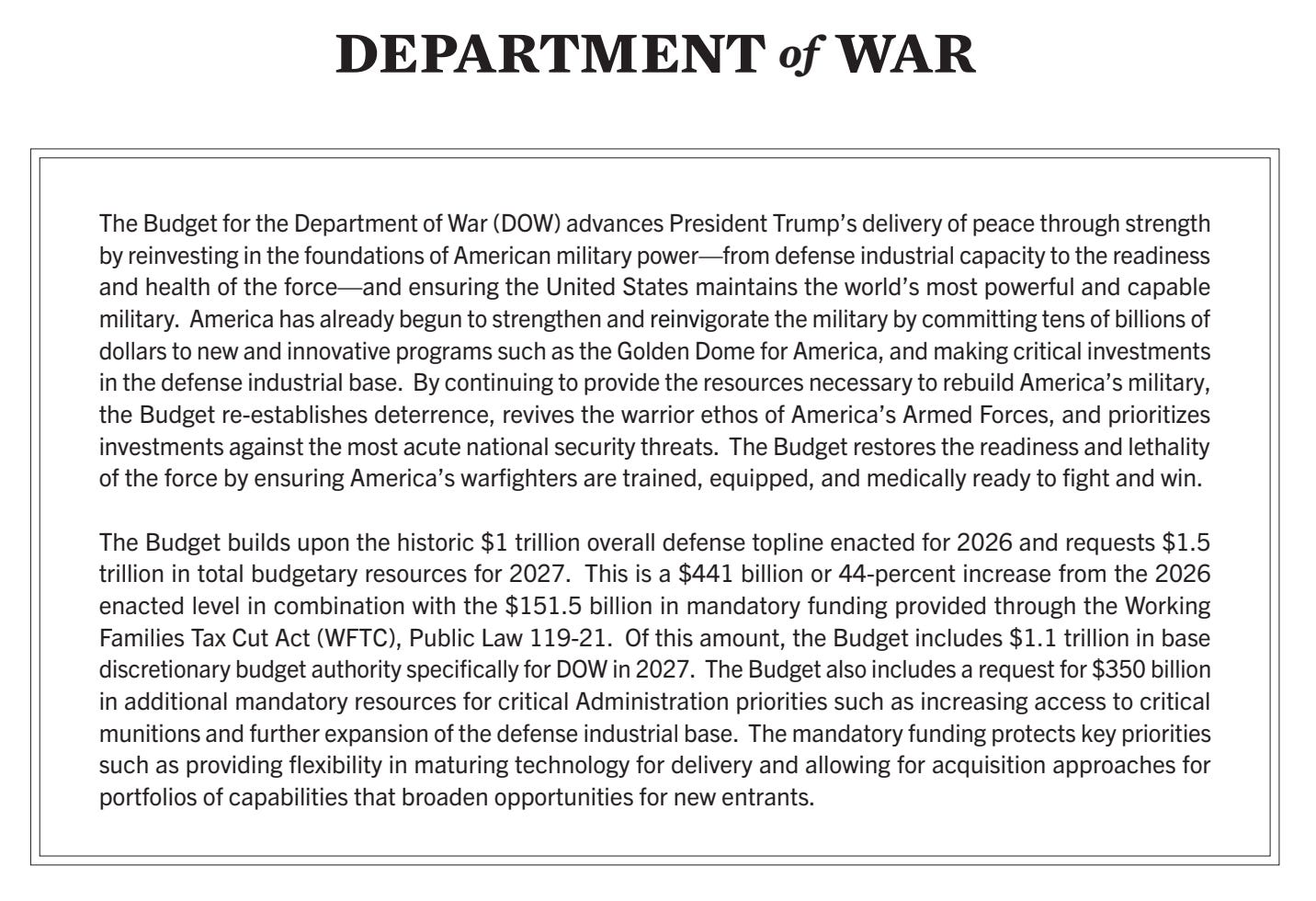
Let me take a moment to translate this budget math to household math. A $500 billion per year rise in defense spending — divided by about 130 million households — equals roughly $4,000 per household per year. You won’t literally get an invoice in the mail, but you’ll still end up paying the price.
Moreover, this new defense spending will likely become part of the status quo. Defense lobbyists will jockey to keep the gravy train going, and it will be extremely difficult — if not impossible — to get those numbers back down.
Adding it all up
If this ceasefire holds, it’s really good news. I don’t want to understate that. But the costs of war are not behind us.
Some of the costs are already sunk — embedded in higher oil futures, sitting in damaged infrastructure, and wrapped up in greater uncertainty and delayed investment. Some costs come from newly exposed weaknesses in the global economy, while others are now the Federal Reserve’s problem. And the biggest cost will show up in the federal budget for years to come.
The first cost of war is immediate. The lasting cost is that the world becomes a riskier place for everything and everyone, including doing business.
It may be the end of a crisis. But it’s not the end of the bill.


