


Over the past year, prices have risen by nearly three and a half percent. That’s much higher than typical, higher than the Fed wants, and high enough to explain why you’re feeling uncomfortable right now. That’s headline inflation and it’s the best single description of what’s happening to the cost of living.
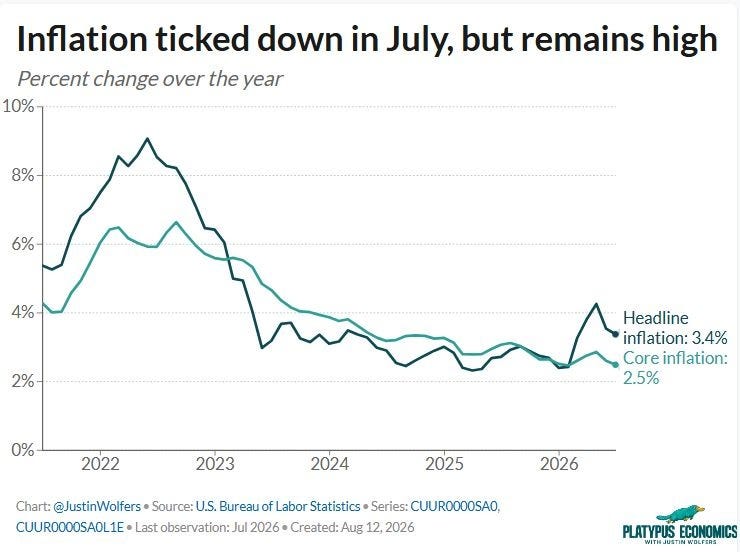
Economists also look at core inflation, which strips out food and energy prices. You might object — those are important prices. They are! But core inflation is useful for a different reason: It helps us figure out where inflation is going.
Basically, core inflation is economists trying to hear the signal underneath all the shouting. Food gets droughts and outbreaks. Oil gets wars and geopolitics. Those shocks matter enormously to your cost of living, but they can tell us less about where inflation is headed next. Strip some of that noise away, and core inflation often gives us a better read on the underlying trend.
There’s a huge family of alternative measures of “underlying” inflation — and Fed Chair Kevin Warsh has his own favorites. You’ll read about a bunch of these, but they’re all telling a similar story.
The gap between headline and core (or other underlying measures) is fundamentally about energy. Energy prices are very high. They didn’t rise sharply this month, but they rose sharply over the previous months, and that’s a big part of what’s driving the cost-of-living pressure you and I are feeling.
What’s actually new today
When economists talk about a fresh CPI report, we don’t rehash the past year — we already knew what happened in eleven of the past twelve months. The exciting part is the twelfth month that this report updates us on: July.
And there we learned:
Core prices rose 0.2% in July. Not bad. At that pace, you’d get around 2½% inflation over a year.
Headline prices rose 0.1% reflecting the fact that energy prices — while high — weren’t still rising last month.
The third way economists read these numbers is to ask: what did we learn relative to what we thought yesterday?
Compare today’s monthly figures to Wall Street’s expectations, and the answer is: prices rose almost exactly as fast as expected.
So today’s report is not a lot of news. Prices are rising quickly, but in pretty much the way we already expected.
What’s driving inflation?
1. Tariffs.
Tariffs have been one of the big inflation stories of the Trump administration. But much of the first tariff shock is now more than a year old. Prices for many tariff-hit goods jumped; now they’re mostly just high. And inflation measures how fast prices are rising, not how painfully high they already are.
That doesn’t make tariffs harmless. The elevator may have stopped going up, but you’re still stuck on the expensive floor.
And tariff policy is hardly finished. The administration is still planning more tariffs, while the president often adds new tariffs without even planning. So the first tariff shock may be fading from the inflation data just as the next one is arriving.
2. Iran.
Iran matters because the Strait of Hormuz matters, and the Strait of Hormuz matters because that’s how the world gets a lot of its energy.
The United States may be largely energy independent, but American energy firms can always sell abroad, so U.S. oil prices track world prices. And world prices have risen dramatically. Point is: There’s a clear line from the decision to invade Iran to higher energy prices.
Wages aren’t keeping up with prices
The cost of living is rising at a rate that feels genuinely uncomfortable — and the reality you feel in the store is borne out in the data. Don’t let anyone tell you otherwise.
And there’s another reason it feels so bad.
Prices are rising quickly, but the average American’s wage is not rising anywhere near as fast. In economist-speak, real wages — that is, your wages adjusted for inflation — are falling: the amount you can buy with the average paycheck is lower today than it was a year ago.
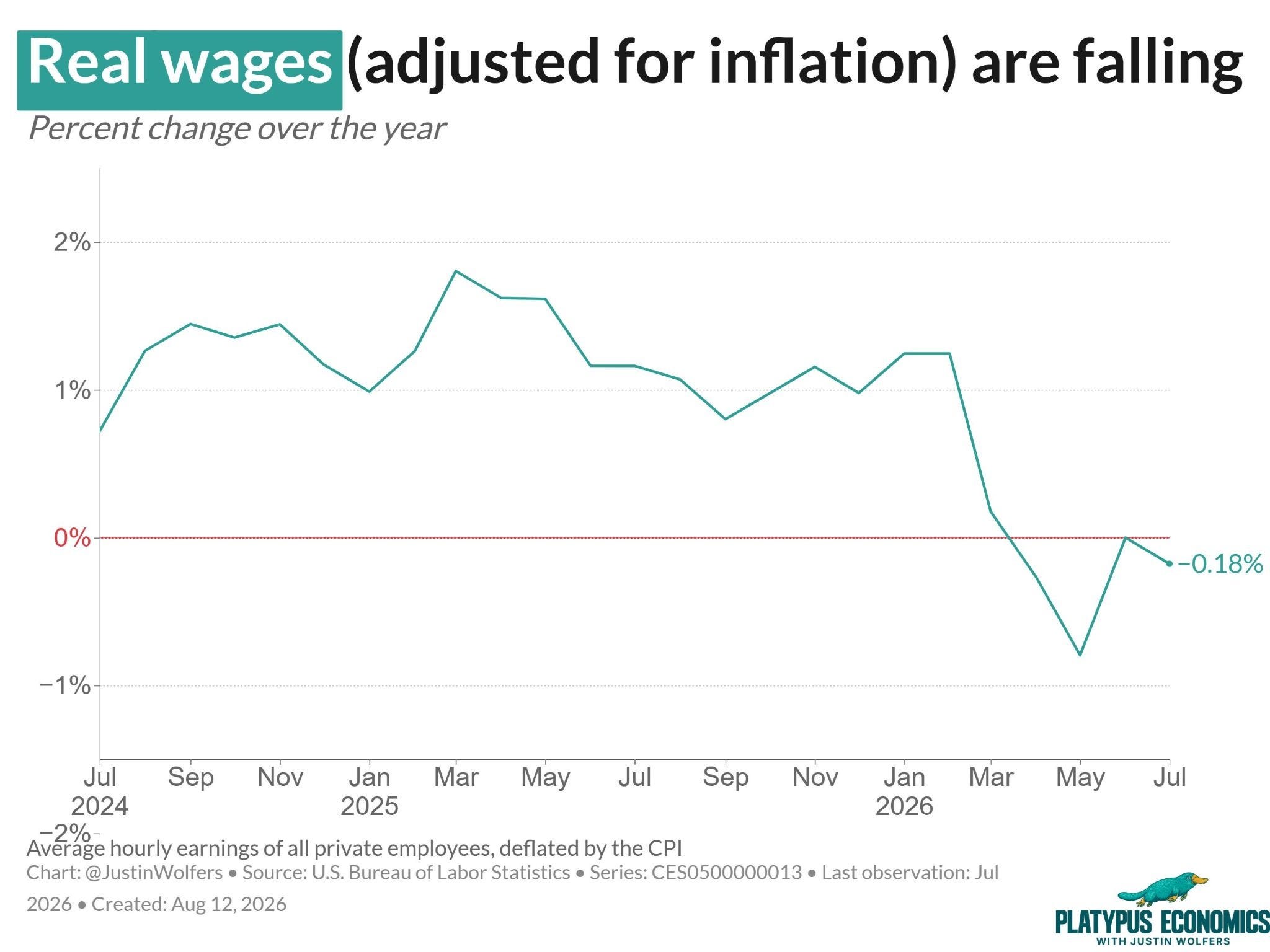
That’s not how this is meant to work. Part of it may be an adjustment lag — energy price spikes hit the supermarket quickly, and maybe pay catches up later. But part of it is that these are supply shocks: prices rise for reasons that don’t give your boss any reason to help you catch up.
Energy ticked down, but not enough
Energy prices ticked down 1.5% this month — but these prices swing so wildly that a move that small basically says the high prices we had a month ago, we still have today.
Over the year, energy is up 15%. Gasoline, as you well know if you’ve filled up recently, is up 25%. Heating oil is up 39%.
And you can watch those energy costs filter through the economy. The first place it usually shows up is airfares, which have shot up — the average ticket is 25% more expensive than a year ago, and rose another 2% this month alone.
You can trace that directly back to energy, and directly back to the war in Iran. And I don’t see relief coming anytime soon.
The burrito discourse (yes, really)
If you’re terminally online — and I try not to be — you’ve seen the burrito discourse. A student somewhere said burritos shouldn’t cost $20, and conservatives piled on: denying that burritos cost $20, denying that you need burritos, or arguing this proves the president’s focus on affordability is going nowhere.
I find it a fascinating meta-discussion — burritos as a metaphor for how we think about affordability. (Believe it or not, I’ll have more to say about burritos in the future.)
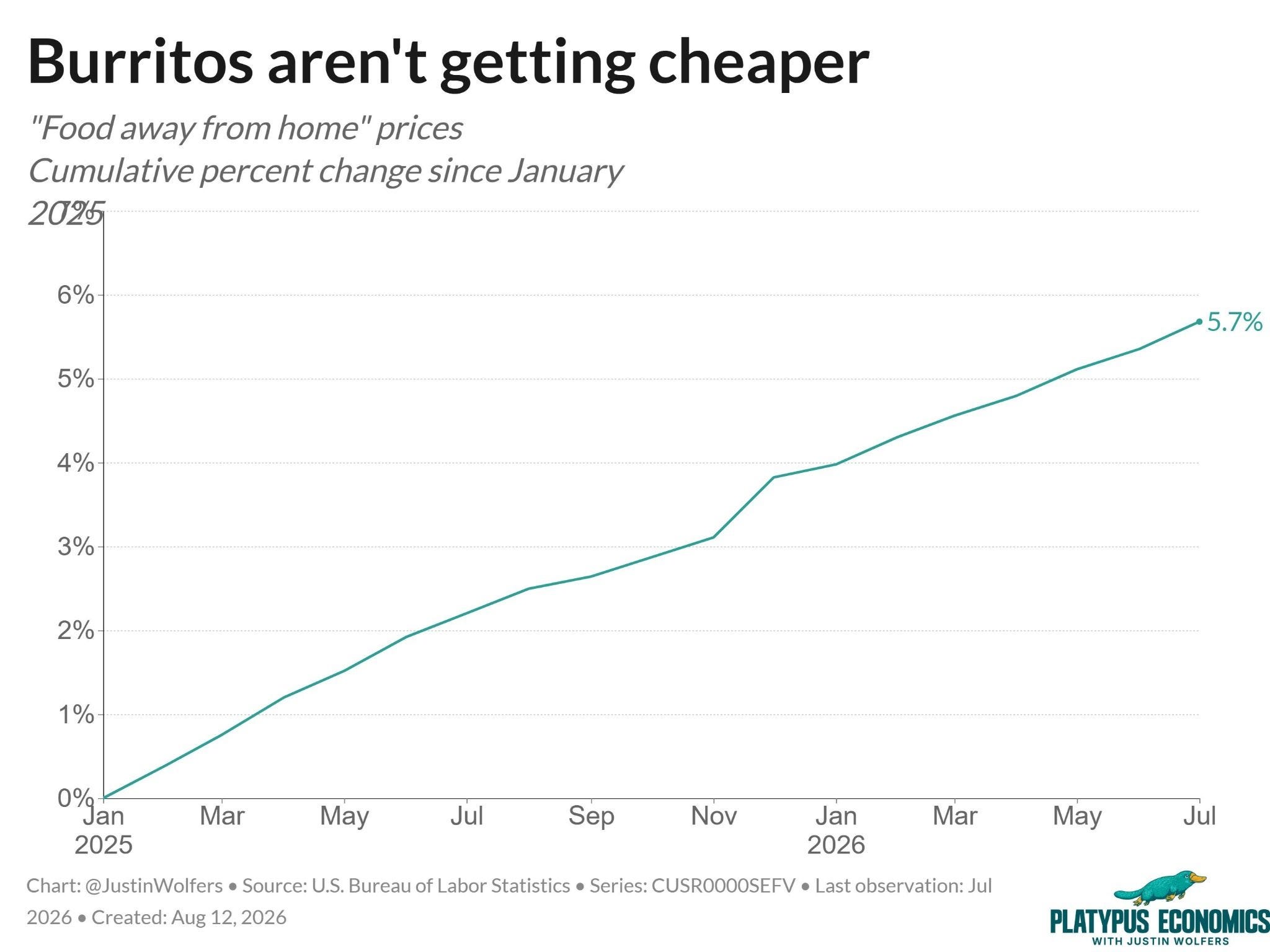
The CPI does not, I’m afraid, have a burrito index. But it does track prices for “food away from home” (i.e. restaurant and takeout food). Since President Trump took office, that index has risen 5.7%. Higher than you’d want over a year and a half, and definitely noticeable — though probably not enough to push actual burrito prices to $20. If anyone’s paying that, I hope they’re getting a lot of guacamole.
And speaking of burrito ingredients: let’s talk about lettuce.
This month saw the largest seasonally adjusted decline in lettuce prices ever recorded — down 16%.
What a bargain, stock up while you can!
You might think that’s terrible advice, and I agree: people have been getting extremely sick from contaminated lettuce. The FDA didn’t issue a recall (although Taylor Farms recalled its known bad leaves). Even so, there’s a lot of risky lettuce out there, and it’s been up to you and me to decide whether to eat it.
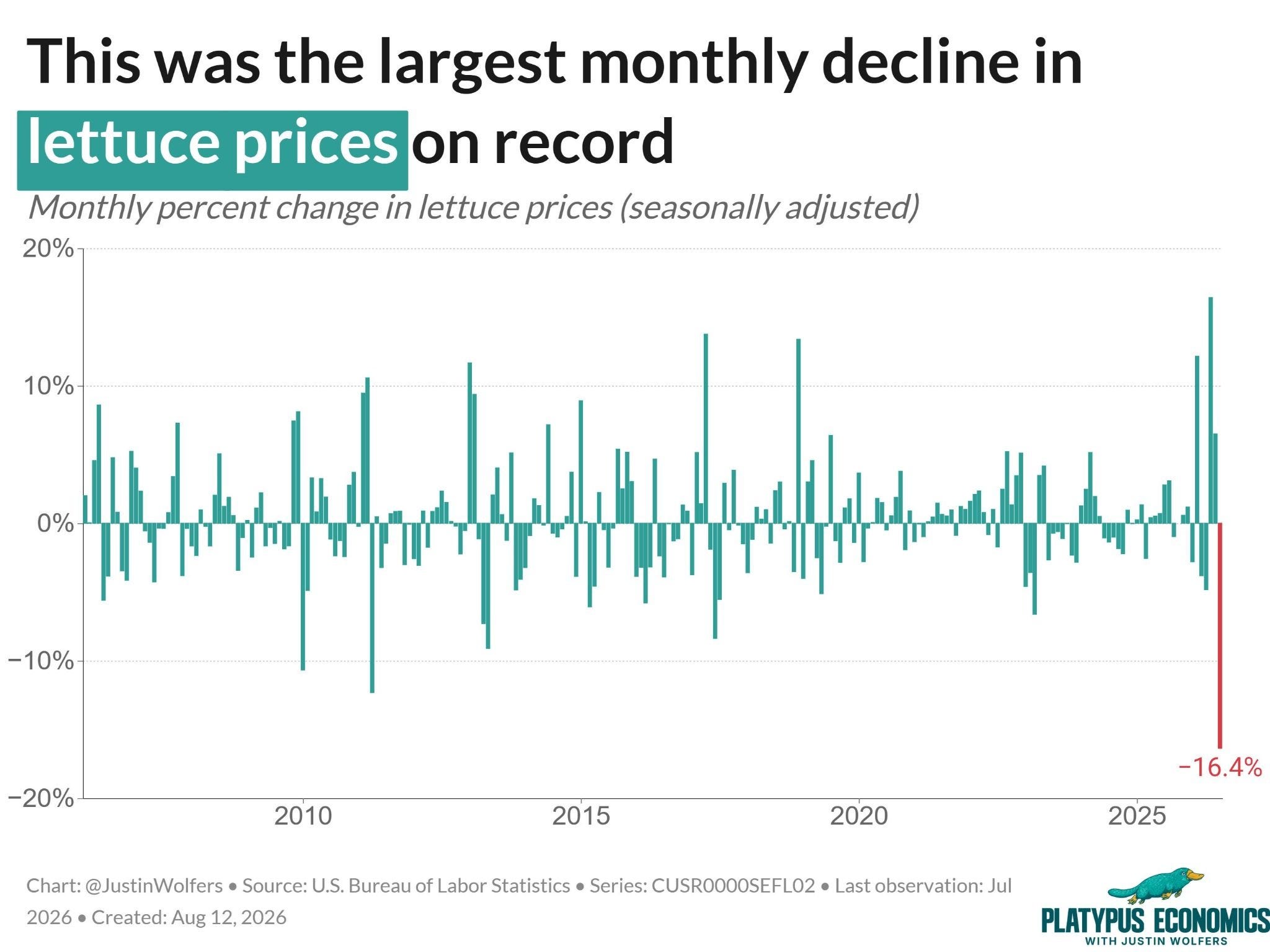
It turns out that when lettuce comes bundled with the possibility of many trips to the bathroom, people buy less of it. Demand decreases, and so does the price. (This, friends, is Economics 101. Keep that one for your classroom.)
What it means for the Fed
Many people will read this report through the lens of the Fed, which has been very much in the headlines. Kevin Warsh has stated his desire to bring inflation down, but seems to believe in a sort of immaculate disinflation — cross your fingers, hope hard, and it will happen.
There’s been a lot of doubt about his resolve.
Today’s on-expectations number leaves the Fed debate roughly unchnaged. The much-discussed shift to raising interest rates was pushed to September; the recent employment report made that a bit less likely; today makes it neither more nor less likely.
The Fed is in a genuinely difficult spot — a bunch of forces pushing prices up while employment growth may be faltering — and the new chair has decided he doesn’t want to tell us what he’s thinking. So markets are very much up in the air about what comes next.
Looking ahead
Inflation is high, and it feels uncomfortable. It may be starting to come back down, but today’s report doesn’t settle that question. The good news is simply that there wasn’t any new bad news.
The big thing to watch now is oil. If the war in Iran winds down, the Strait of Hormuz reopens fully, and energy prices fall, headline inflation could improve pretty quickly.
But developments over the past week have pushed that relief further into the future. Oil markets are now pricing in higher prices for longer.
So for all the noise in today’s CPI report, the biggest question about where inflation goes next may not be answered in Washington at all. It may be answered in the Strait of Hormuz.
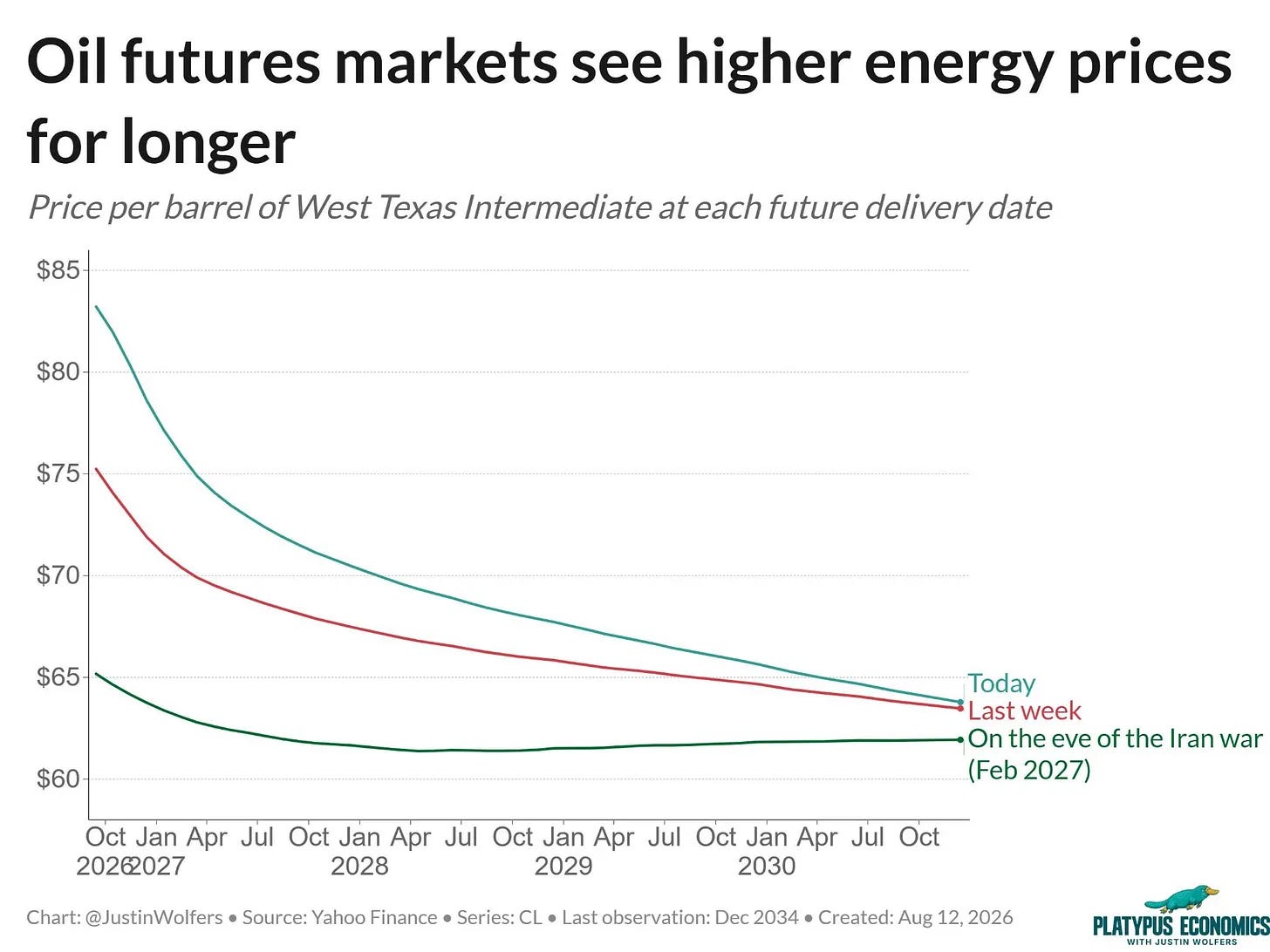
If your optimism about inflation rested on the war in Iran ending soon, the Strait of Hormuz reopening, and energy prices falling back down (dragging inflation with them), what we’ve learned is this: if that happens, it will happen later and be weaker.
Which is one big reason it’s still very hard to know whether or not inflation is on its way back down.
I learned something today! Thanks JW.
Just how trustworthy are numbers from the government anymore? Since POSOTUS fires numbers people when he doesn’t like their output, aren’t the remaining staff apt to cook the books to keep their jobs?
"your wages adjusted for inflation — are falling: the amount you can buy with the average paycheck is lower today than it was a year ago. That’s not how this is meant to work."
Have to disagree. That's exactly how it is meant to work. Our overlords make sure we have to run faster just to stay in the same place.
The Strait of Hormuz will be closed until Iran sees whether the Dem politicians will be seated in Congress in early January. If Dems control either chamber, Iran will consider a new policy. If Dems are still in the minority, Iran will stick with its current policy. Iran's latest proposal was designed to be rejected, dragging out the stalemate. Trump can holler all he wants about how he's the one in control. Trump's talk is cheap. It's the only thing in America that's cheap right now.