


Earlier this week, the White House deactivated the badges of CNN, MS NOW, and Politico as part of its ongoing war on the free press. So I took you through the economics research on why a free press matters.
You can catch up on that here:

Yesterday, a judge temporarily ordered the White House to restore access to the news outlets. The administration had argued the ban was about national security. The judge wasn’t persuaded, noting that the president’s own stated reason was that he didn’t like their coverage.
Then things got complicated. Reporters from the three outlets were allowed back in, but CNN is still being kept out of the TV press pool. Four TV networks are now boycotting that press pool in solidarity.
So when Xi Jinping arrived at the White House, some of the only cameras with access belonged to Chinese state media. But CNN is too much of a national security threat.
Now it’s time for The Professor Is In, where my producer Augusta asks me follow-up questions about that piece. Think of it like office hours where I take your questions.
What if my producer is reading all day?
Augusta’s first question was: if the government interferes with the free press, are there effects on markets?
Short answer: Yes. To understand why, let’s look at a workplace.
Augusta works for me at Platypus Economics. She’s passionate about economics education. But she’s also passionate about other things, including fiction. So, at any given moment in the workday, she might be reading a book. She probably isn’t — but I can’t always know for sure.
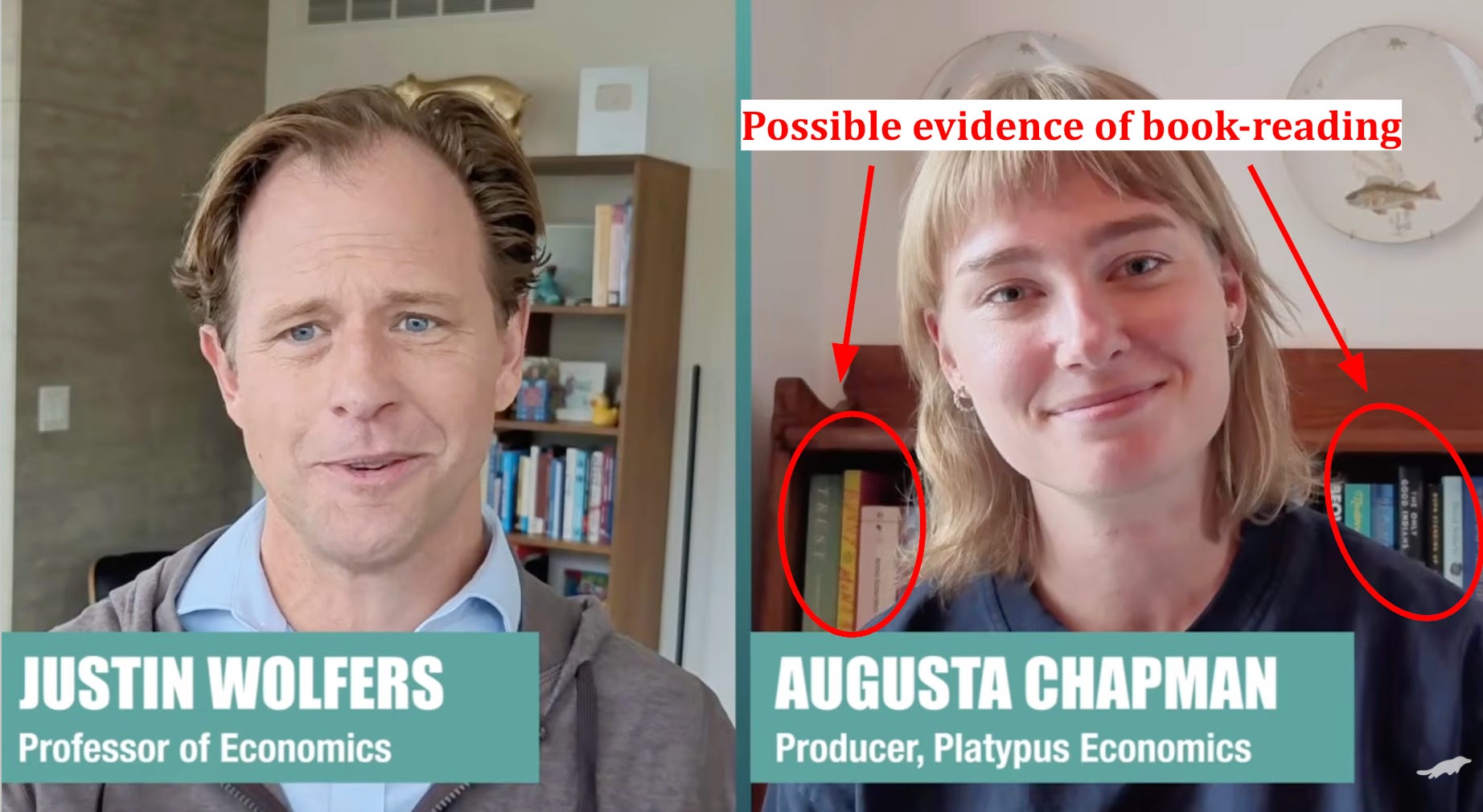
This is a problem because bosses and employees often want different things. The employee wants a promotion, the boss wants the work done well. The employee wants to read a book, the boss wants… whatever bosses want.
We are the bosses of politicians. But we can’t always see exactly what our employees — like the president — are doing. And there are many things they could do besides read books. They could enrich themselves, rather than helping the American people (and we have some evidence that that’s occurring right now). They could decide that they’re only going to help some groups rather than all Americans, favor their mates from the local country club, or just take it easy and spend a lot of time playing golf. Without a free press, it would be hard to know if they’re on the job.
If a politician doesn’t work for the American people, then as their bosses, we need to put them on a performance-improvement plan. The free press gives us the information we need to make those calls.
Strong press makes for a strong boss
Markets understand this relationship. They’re sophisticated. They spend a lot of time parsing politics.
If the president were to start favoring the companies owned by his mates, those stocks would go up. If the president were completely uninterested in doing anything about the budget deficit, then you would have bond yields rising quite dramatically. And… that’s all happening.
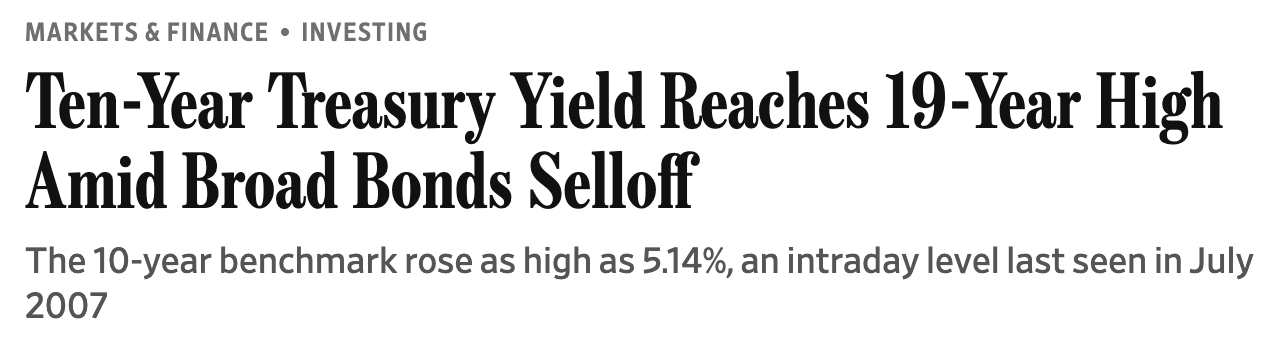
Credit ratings show this principle, too. Rating agencies’ reports very rarely come out and say “America can’t pay its debts.” Instead they say “America won’t pay its debts.” That is a statement about the political system. The last time a downgrade came, it was because of a judgement that nobody in Washington had incentives to keep the deficit sustainable.
A weaker press makes us less effective bosses. That will show up in the interest rate we pay on the national debt, and from there in mortgage rates.
We’ve already seen this happen locally. When local newspapers closed, voters became less-informed bosses of local politicians. When those local governments went to the bond market, they paid higher interest rates. The bond market was saying: without checks that keep you on task, I’m worried you won’t pay your bills.
What readers asked about press freedoms, and more
More questions Augusta brought me:
What is a natural experiment, anyway?
How can radio towers from the 1930s tell us anything about 2026?
And one of the most requested from YouTube viewers: Why is there a golden pig behind me?
Finally: should businesses be fighting for a free press?
Yes — as a group. A free press is good for business because it keeps politicians motivated to do their jobs, which creates better laws and better institutions. Those things are necessary for business to compete and thrive.
But there’s another way to do business. If you think there’s the potential for corruption, you can skip the marketplace, cozy up to the bloke in charge, and get him to outlaw your competitors. There’s a long line of very ritzy executives outside Mar-a-Lago right now. If you’re good at crony capitalism, you don’t want the press watching. If you’re good at making the best products, you do.
There’s also a free-rider problem. Everyone shares in the benefits of a free press, but the share of benefit is small. Even a company as big as Walmart wants to be a free rider. Every business feels like a different business should pay to defend it. Economists call a free press a public good.
The press isn’t the only public-good institution American prosperity rests on. Some others include democracy, the rule of law, our contracts and engagement with the world.
The bosses are meant to enforce that. If we can see what they’re doing — and what they’re not doing — we can better tell when it’s time for a new C-suite.
Watch the full episode for the rest.
Money in politics is political power. Please do a deep dive into the economic effects of Citizens United
A great episode Jaz. You make so much sense and probably cents too but I don’t begrudge you that. That we are the bosses in government is not something new to me but why do those employees treat us with such distain and make it hard to fire them. How do we take cronyism out of politics because even with a free press they don’t always report on those nefarious acts that they commit. So if they are to help us clean up politics then who helps us clean up the reporting which also has its cronyism but they don’t work for us. I know that we can stop tuning in or buying their paper’s but then if so many of them are bias we end up with no information at all.