


The last inflation report before the election is out, and it’s a doozy.
The headline: Inflation is worse than we thought and higher than it ought to be. No one is going to be happy about it.
This probably doesn’t come as news to your wallet. This report describes your reality this September. What the report gives us an update on: how widespread the pain is, if it’s easing, and what the Federal Reserve is likely to do about it.
Too high and worse than expected
Over the past year, consumer prices rose 3.7%. For context, the Fed aims for an inflation rate around 2%.
There are three ways to read today’s number.
First, in absolute terms: It’s too high.
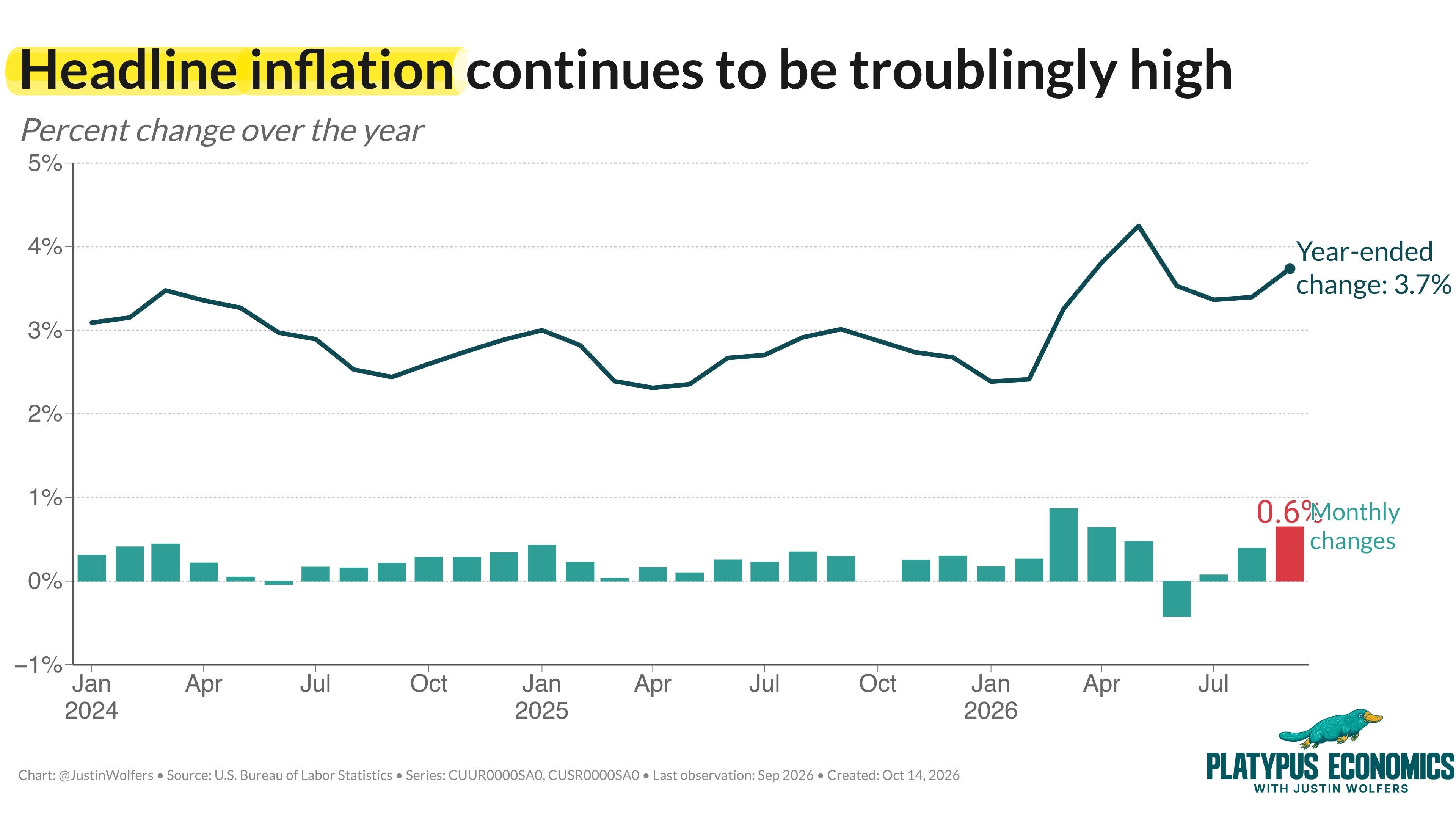
Second, in terms of trends: Headline inflation isn’t coming down. Because of energy prices, year-ended inflation might even be trending up. At best, it’s stuck at a troublingly high level.
Third, relative to expectations: Again, too high. Wall Street folks were expecting something a little lower, around 3.5 or 3.6%. That’s the real news today. Inflation is high and we all know that. But we didn’t know it would be higher than expected. When the data surprise you, that’s when you should update your story about the economy.
In September alone, prices rose 0.6%. That’s after rising 0.4% in August. If inflation kept running at that pace — and hopefully it won’t — the annual number would become very, very troubling. There’s little in this report to suggest inflation is easing.
Over the next few days, you’ll see commentators and talking heads pointing to one price that rose a lot, or another price that barely moved. Whenever someone does that, ask what story they’re selling. You can bend data to fit a political moment by cherry-picking. The top-line number measures cost of living, so it’s best to start there.
Core inflation is stuck
Economists closely watch what we call core inflation. Core inflation takes food and energy out of the picture. That’s not because food and energy don’t matter (of course they do). It’s because their prices are incredibly volatile. A drought, bumper crop, geopolitical tension: these things can whipsaw prices. If you strip them out, you often get a cleaner read on the broad underlying inflationary momentum in the U.S. economy.
Core inflation came in at 2.6% over the past year. That’s below 3%, which is good news. But we can’t seem to get it below 2½%. That’s bad news. 2.6% is also hotter than Wall Street expected and suggests that there’s more underlying inflationary momentum than forecasters thought.
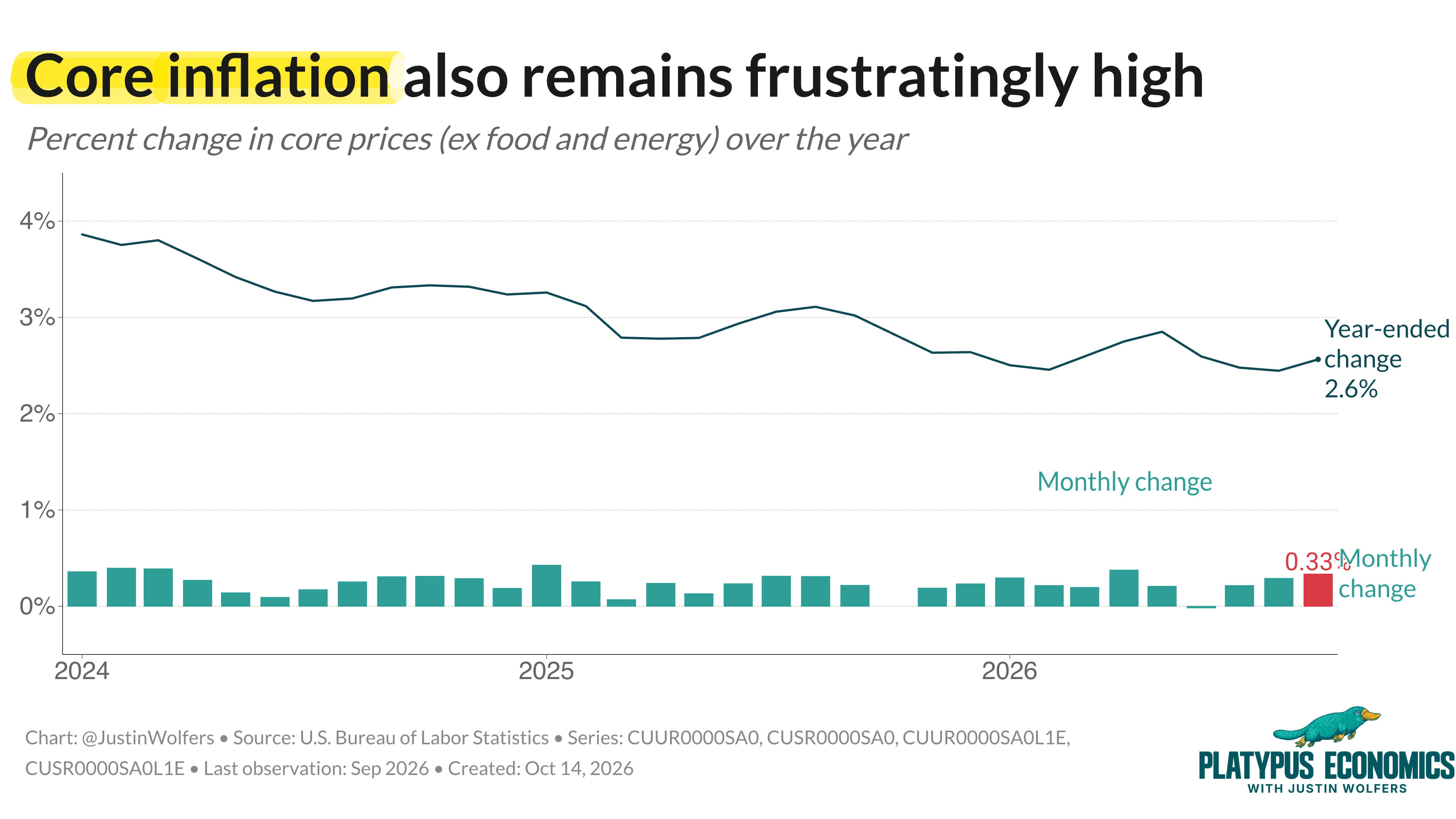
In September, core prices rose by about a third of a percent. If we have a few more months like that then core inflation will be above 3%. And this is one more disappointingly high reading in a long run of disappointingly high readings. Whatever progress we made in bringing core inflation back to normal seems to have stalled over the past year.
Winter is coming for heating bills
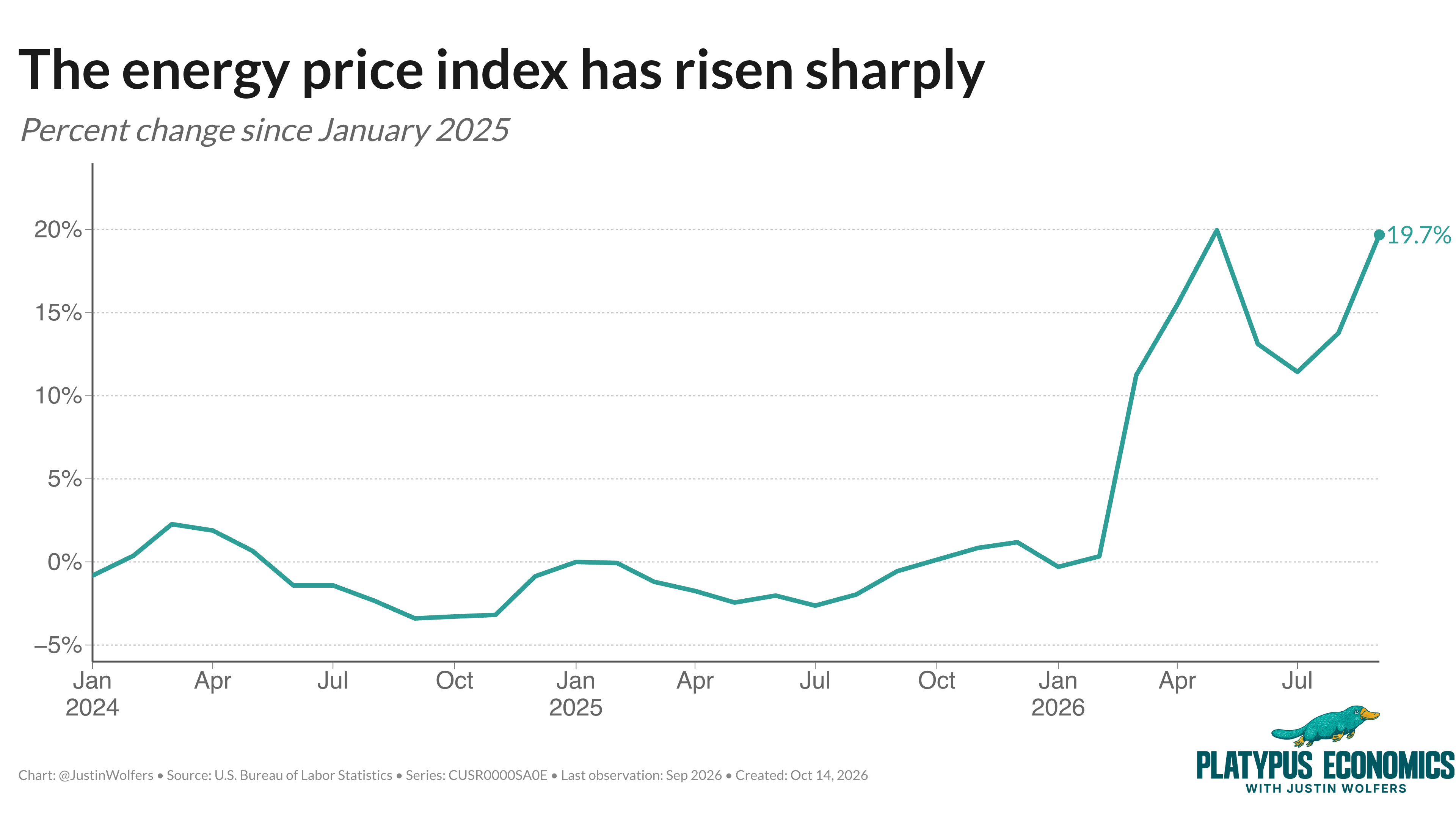
Core inflation doesn’t count energy, but energy finds its way in, because it’s an input into almost everything businesses produce. When firms’ costs rise, they may eventually pass that on in the form of higher prices. Since January 2025, energy prices consumers are paying has risen by about 20%.
I was just in Texas, where it was beautiful and warm. What a blessed life my Texas friends have around this time of year. Then I returned to Ann Arbor, Michigan, where the sky is gray and a winter chill is already setting in…
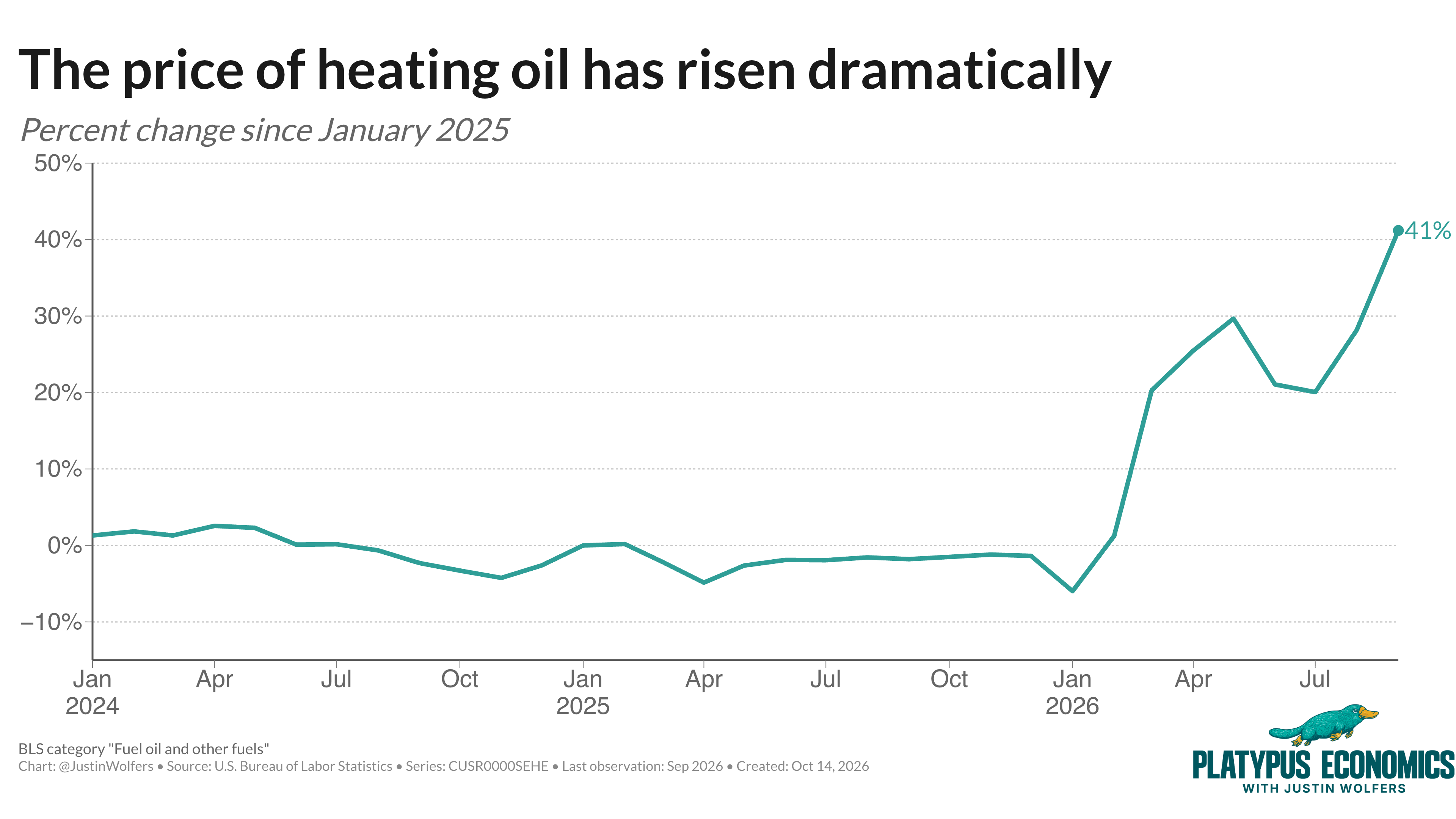
And so for those of us in the Midwest and Northeast, our heating oil bills are about to rise dramatically with the onset of winter. The cost of heating oil has gone up sharply — about 40% — in recent months. For folks who use this to heat their homes, this is going to be a very long and expensive winter.
The current administration has recently become very focused on energy prices — and especially diesel — in the run-up to the midterms. This has led to all sorts of shenanigans. Trump floated an export ban, pushed a temporary tax deferral on red-dyed diesel, talked about a deal to buy diesel from Russia, and invoked the Defense Production Act.
Diesel matters to the American economy, but it is mostly used to power trucks, farm equipment, and machinery. That matters because the “C” in CPI stands for “consumer.” Because consumers don’t buy much diesel, it only gets a tiny weight in the CPI. So even if all this monkeying about brought down prices on diesel (which I doubt) it would barely move the CPI.
Wages aren’t keeping up with wages
Here’s the number I most want you to remember from this report. Prices rose 3.7% over the past year. Wages rose 3%.
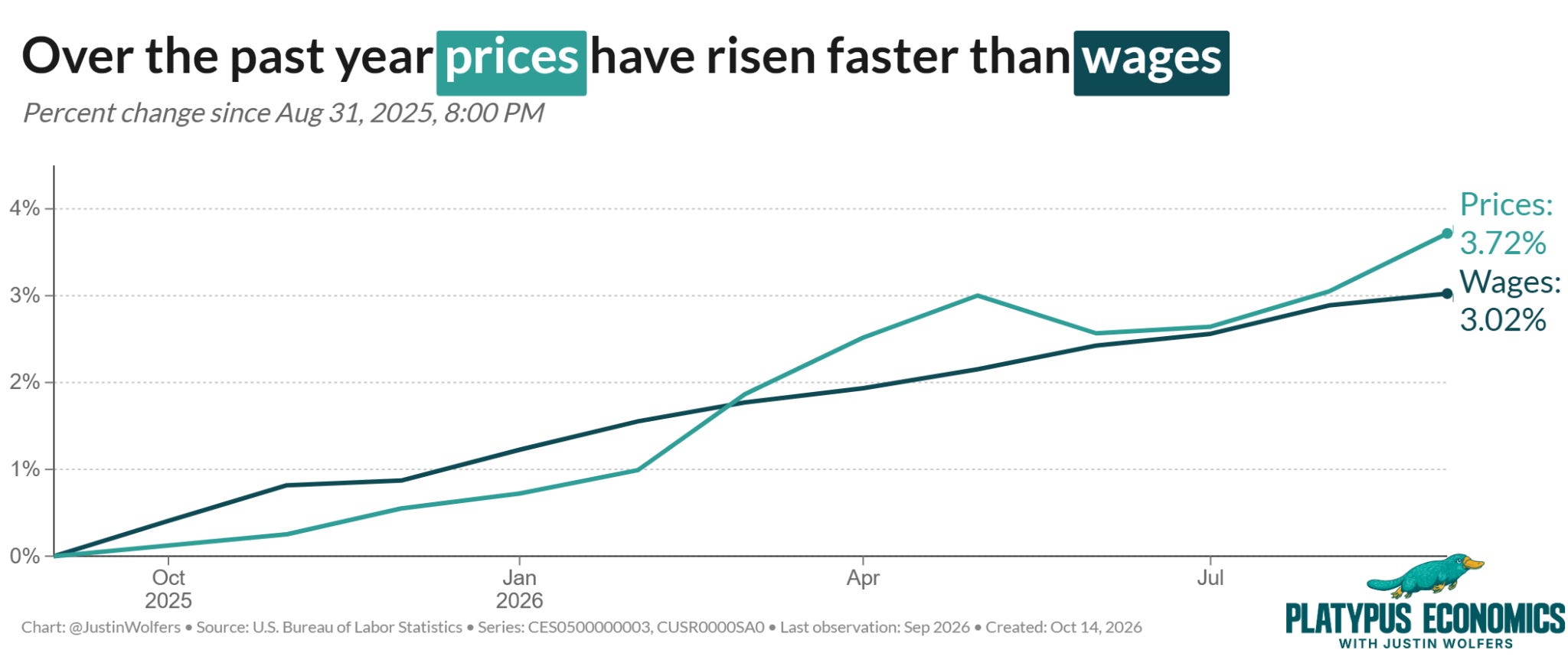
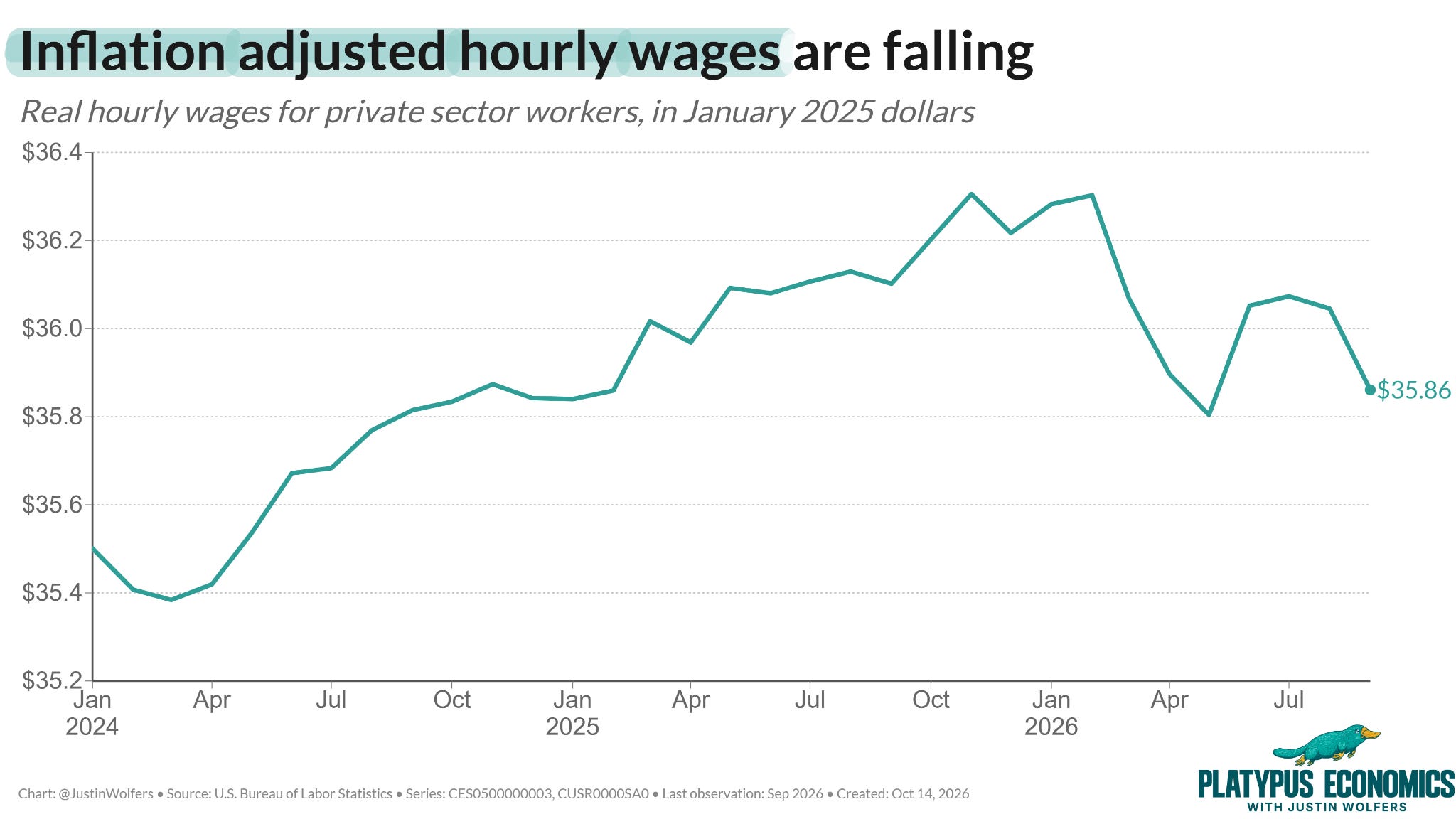
That means real wages, which is what your paycheck can actually buy, fell over the past year. That’s not normal. Normally, economies grow, incomes rise, and workers share in that growth. But workers are slipping behind.
And 3% is only an average. Workers who switch jobs tend to get bigger raises. Many of those who haven’t switched would be thrilled to get 3%; their purchasing power has fallen even further.
The October coin flip
This read on September inflation is worse than we’d feared. It follows a jobs report that suggests the economy is doing okay, but not so well that the Fed would need to raise rates. The expectation was that the Fed would hold off until after the election.
Well, that expectation just got shaken. Imagine you’re a Fed governor who drew a line in the sand. If inflation isn’t too hot, no hike. If it is, hike. This report showed inflation that’s higher, more persistent, more troublesome and more widespread than expected. This might push you right over that line.
Federal funds futures are a market where traders bet millions of dollars on what the Fed will do. Before this morning, those traders put the odds of a hike at the October meeting at 22%. Now they’re at 44%.
And that 44% is awfully close to 50% (yes, I’m rough and ready in my economic analysis), so it’s basically a coin flip, which is about as uncertain as you can be.
My guess is that, whichever way the coin lands, there will be someone dissenting. The last decision was unanimous; it’s very hard to imagine that this time.
Heads rates rise today, tails we hike rates next time
Some things here aren’t really a coin flip. Fed futures markets also put the odds of a rate hike before the end of the year at 94%. There’s even a chance the Fed raises rates twice.
So the question isn’t whether rates will go up. It’s when and how far.
The coin is in the air for October. But, whichever side it lands on, the direction of travel is clear.
And one more word for my nerdiest Platypals
Today’s post includes a paid partnership with Stata, the software I use to crunch the numbers in my posts (and my research).
I used it here to do my own calculations on the September CPI. And if you’re really nerdy, you can use this worksheet to follow along! Or if you’re an economics or econometrics instructor, you might find this useful for class.
I’m actually starting to learn some of this stuff! Yay!
Thanks for the worksheet, mate, but I'm going fishing for a mess of those 10" bluegills to help with the grocery bill.