


Today I joined Stephanie Ruhle on MS NOW, alongside Ron Insana, to talk about a budget deficit that’s close to $2 trillion this fiscal year.
That’s the highest we’ve ever had outside of a recession or a war.
You might look at that and think: the government must be responding to some terrible emergency. Or you might think: they’re being wildly irresponsible. And it’s very much that latter.
At the same time, corporations are hitting record profits. They’re also paying less and less in taxes.
Side note — remember some of the economic promises the president ran on? No tax on tips, no tax on overtime, and no tax on Social Security? Those policies were implemented differently than described, but the important thing to remember is that even in their limited form, those benefits will disappear after the next presidential election. The tax cuts for the rich are permanent.
Stephanie wanted to know: how does this affect the average American?
If someone’s not paying taxes, and we keep spending money, someone else is going to have to pay for that. If it’s not corporations, it’s you.
It might not be this year. It might not be next year. It might get pushed past the midterms or to the next president or to an even longer time in the future, but every dollar we spend, we eventually repay.
We’re already beginning to see some of that. Cutting Medicaid and booting people off food stamps are taking services away from those who need them the most. Remember, those cuts aren’t paying down the deficit. They’re going towards tax cuts for the rich.
So where do Americans feel this? Imagine you’re in a line at the bank. The government runs to the front of the line and screams, “I want to borrow as much money as you can give me!”
If you’re borrowing for a mortgage, for college, or for a car, you’re competing against the government. The fancy name for that is “crowding out.” The result is the headlines you’re reading about higher bond yields.
And this isn’t an abstract notion only affecting government finances. As government bond yields go, so go other interest rates, like mortgages.
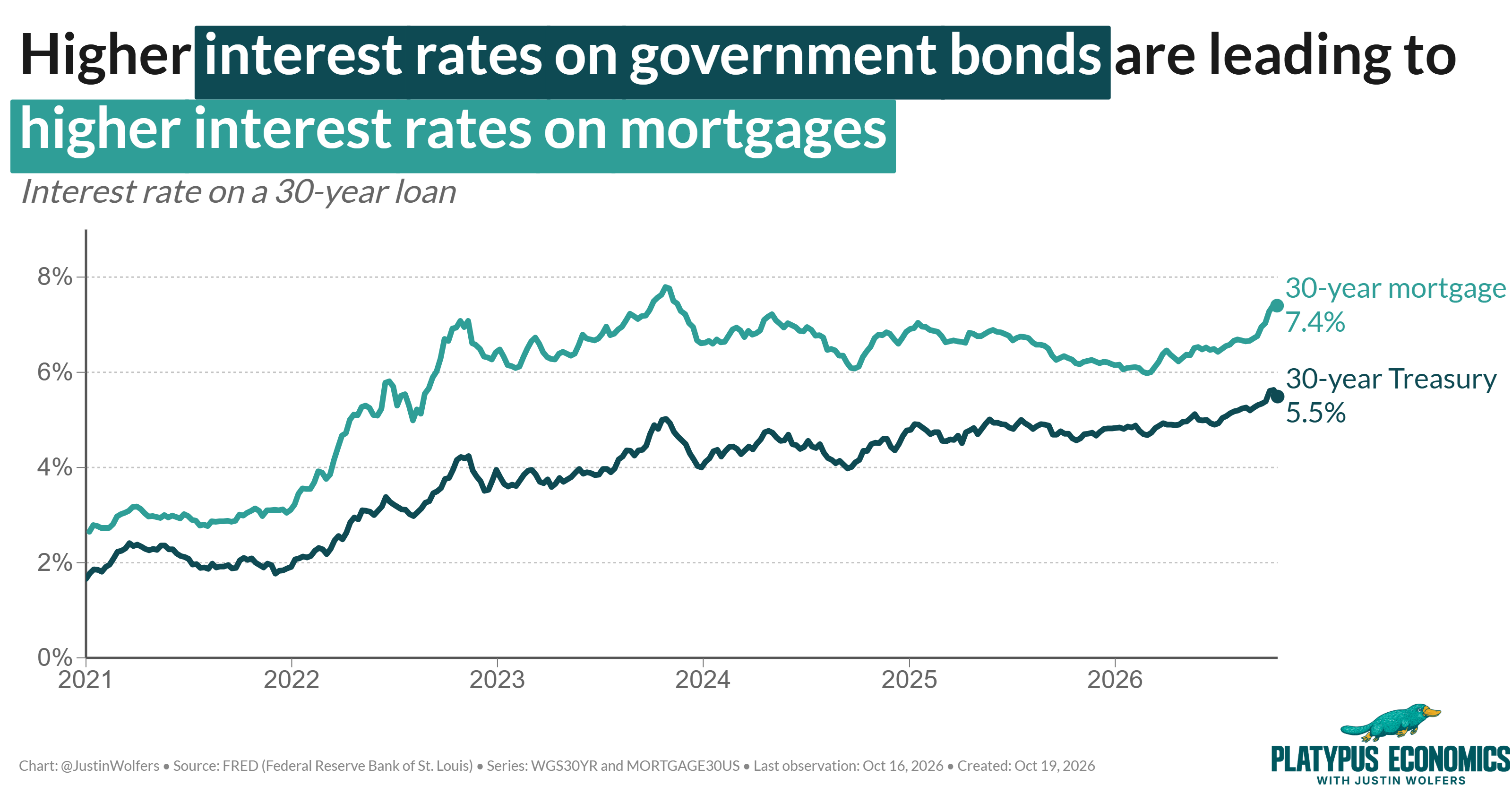
This means that for a lot of families, once they’ve paid their mortgage, there’s going to be less left for them at the end of the month.
You can tune in to our full conversation above.
That so many people are suffering because of the profound, insatiable greed of a few is so depressing. That's so many of the suffering don't vote, or vote for more suffering for themselves is even more depressing.
Never underestimate abject stupidity combined with unfettered greed.