


I have never seen a germ. Most people, I reckon, have never seen a germ. Still, I wash my hands before I eat a meal, because I know that my hands might be covered in invisible little things that could kill me. If you’ve never heard that idea before, it sounds preposterous. But germ theory changes the behavior of billions of people a day.
I just got back from Stanford’s Initiative for Financial Decision-Making, where I gave a keynote speech. My host was Annamaria Lusardi, who is the world’s leading scholar of financial literacy. The conference was attended by economics professors from around the world. These folks are teaching how people can use economics to make better choices in their personal and financial lives. So the stakes here – for them, their students, and for you – are high.
My role was to get folks fired up, and provide some advice on how we can be more successful in our role as financial educators. So I centered the talk on one big question: how do we convince people to wash their (financial) hands?
Financial education is failing
Right now, most people aren’t practicing good financial hygiene. Many don’t use their employer’s retirement match. They carry credit card balances with exorbitant interest even as they’ve got cash in savings accounts earning nearly no interest. They pay excessive fees to stock pickers, even though that typically leads to lower returns.
When you ask Americans simple questions of financial literacy, many do not understand the basics. They don’t know if germs exist — or how they should be fighting them.
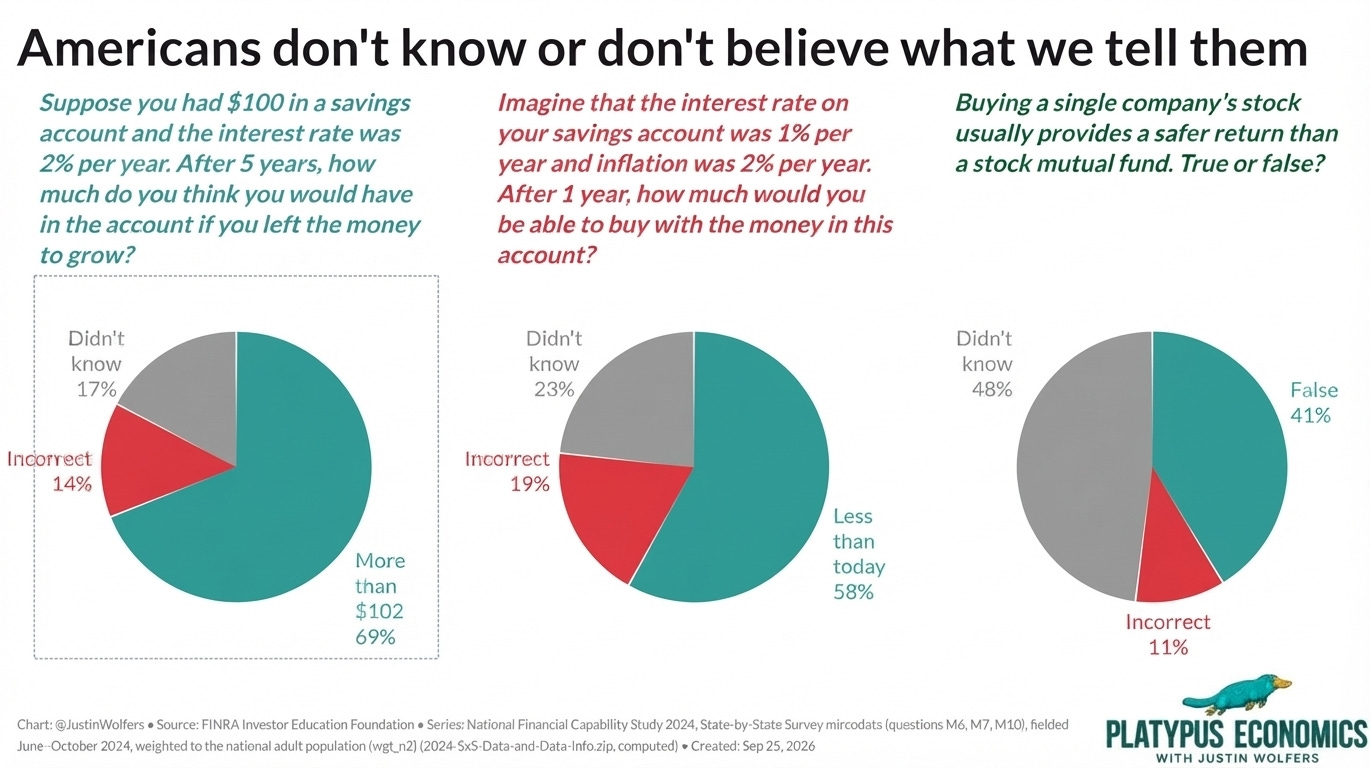
Why are we failing to teach simple and important truths?
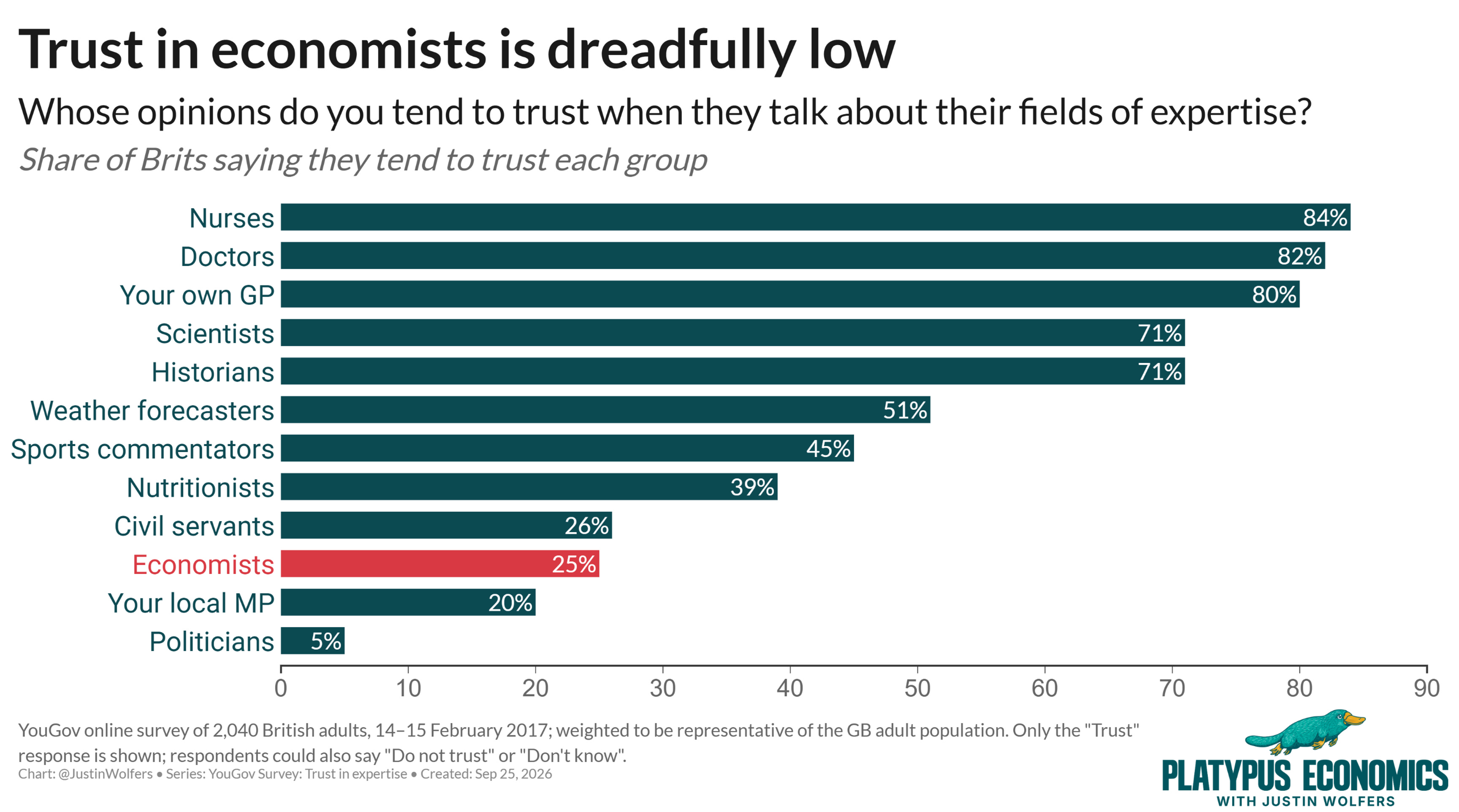
One problem we’re facing here is that people don’t trust economists. One survey said 3.7% of folks trust us a great deal. Another 26.6% trust us somewhat, and my guess is that group is mostly our parents. Everyone else is unconvinced. A separate survey in the United Kingdom compared economists with others, and we come out ahead of only one group — politicians. That’s it.
So how do we get people to wash their hands?
Principles for doing better
I offered the group some economic principles.
First, consider opportunity cost. Academics are used to only stepping forward when our analysis is close to perfect. That’s what our training drills into us. But every time experts don’t step forward, someone else does. Oftentimes, in the personal finance space, that “someone else” will try to rip off the next people in line.
So, step forward.
The second principle: jargon is a tax, and prices matter. “APR” doesn’t mean much to most people. “Interest rate” does, and “monthly bill” really does. When our ideas are a hassle to understand, that’s a tax. Shame especially keeps people away. Be clear and compassionate. Don’t increase shame.
Third: comparative advantage. You’re not a guru. You’re an economist. When someone asks for a stock pick, that’s a teaching opportunity. Pivot and explain why this year’s top stock pickers don’t have any special insight into next year. They’re asking you the wrong question, and you can redirect it into good information.
Fourth is that we’re in a repeated game. We’re experts. The folks who want to sucker our friends and family — and I’m using loaded language here intentionally — those people just want to get in, get a commission, and get out. We can play the long game. That means always telling the truth.
Why I talk about cats when I teach economics
The talk — if you watch it — quickly moves on to some advice about how to communicate more clearly.
Some of this is pretty basic, and we understand it in our personal lives, but forget it the moment we’re at work. Start with the question the person actually asked. Answer it with one lesson and one action. Tell actual stories. I don’t teach the consumption Euler equation. I describe what it would be like to meet your future self. How would the two of you work out how to share your money?
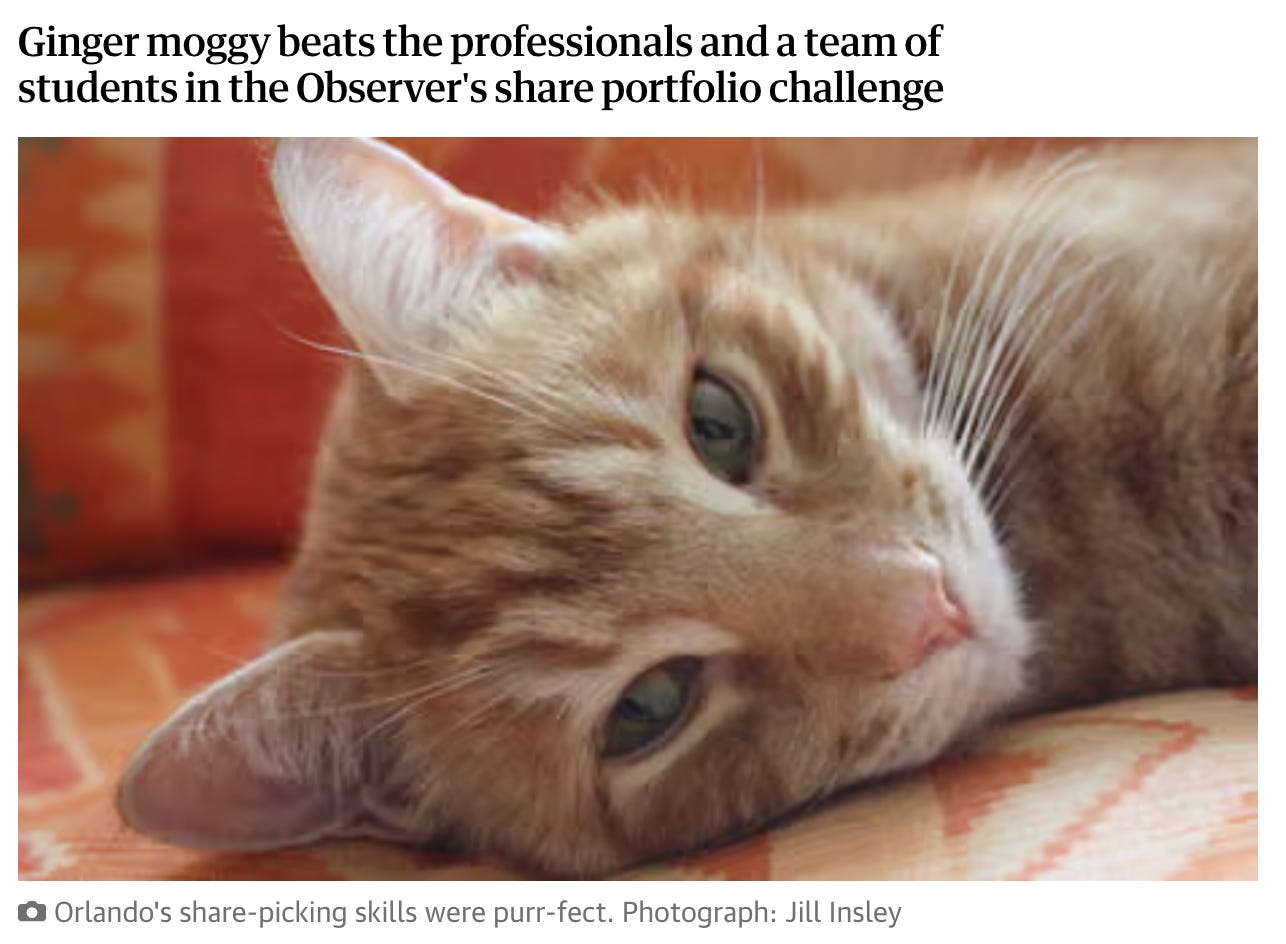
Instead of teaching the efficient markets hypothesis, I tell people about Orlando. He’s a cat who beat three professional stock pickers in a British newspaper’s contest. I let them wonder how that happened.
Analogies also need to do real work, not just be cute. They can’t only be memorable. They should also be true.
Finally, talk like a person. Don’t say “labor supply decisions among low-income households.” Say “a single mom working two jobs, trying to figure out if she can afford child care.” Dollars are in people’s wallets. Percentages aren’t. Try to stick with what resonates.
Big feelings on the plane ride home
I left this conference inspired. There’s a community of people trying to help folks live better, richer, fuller lives. They believe that a bit of financial literacy goes a long way. The whole event radicalized me into realizing something I should already have known: The work of teaching the world economics should extend to teaching financial literacy. It can empower people to make better choices and live better lives, and that’s what Platypus Economics is all about.
I arrived home and immediately called my team. We’re talking about doing more to teach financial literacy and personal finance. We’re still figuring it all out. I want to hear your thoughts: What works, what doesn’t, what do people need more of, and where might Platypus Economics fit in? Platypus Economics isn’t a thing; it’s a community and a conversation, and it evolves, and I would love your help in figuring out next steps.
And if you want to hear the full argument, watch the talk.
I think teaching more personal finance is a really good idea. This article was a good read.
I just listened to an unnerving report about diesel fuel. It painted a grim view of what's ahead for inflation given trucking, agriculture, and home heating oil reliance on it and how given the Russia/Ukraine and Iran wars, we're running out of it and can't produce more of it than we're already doing. Just look up "Diesel Supply Squeeze".