


The latest CPI report is out and the results aren’t pretty.
Here’s what you need to know: both headline inflation and core inflation came in hot — and a tad hotter than most of us expected.
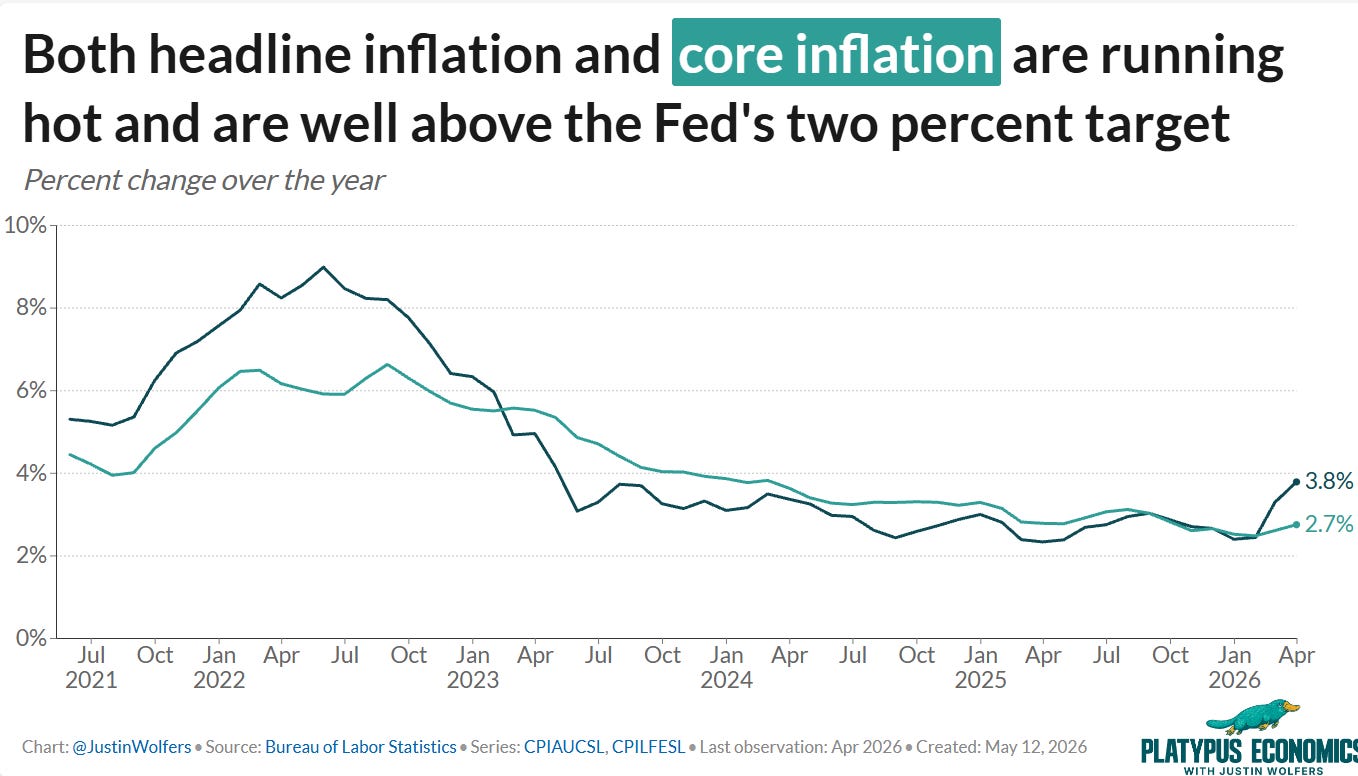
Headline inflation (which includes fuel and food prices) rose 3.8% from a year earlier — the fastest rate since 2023.
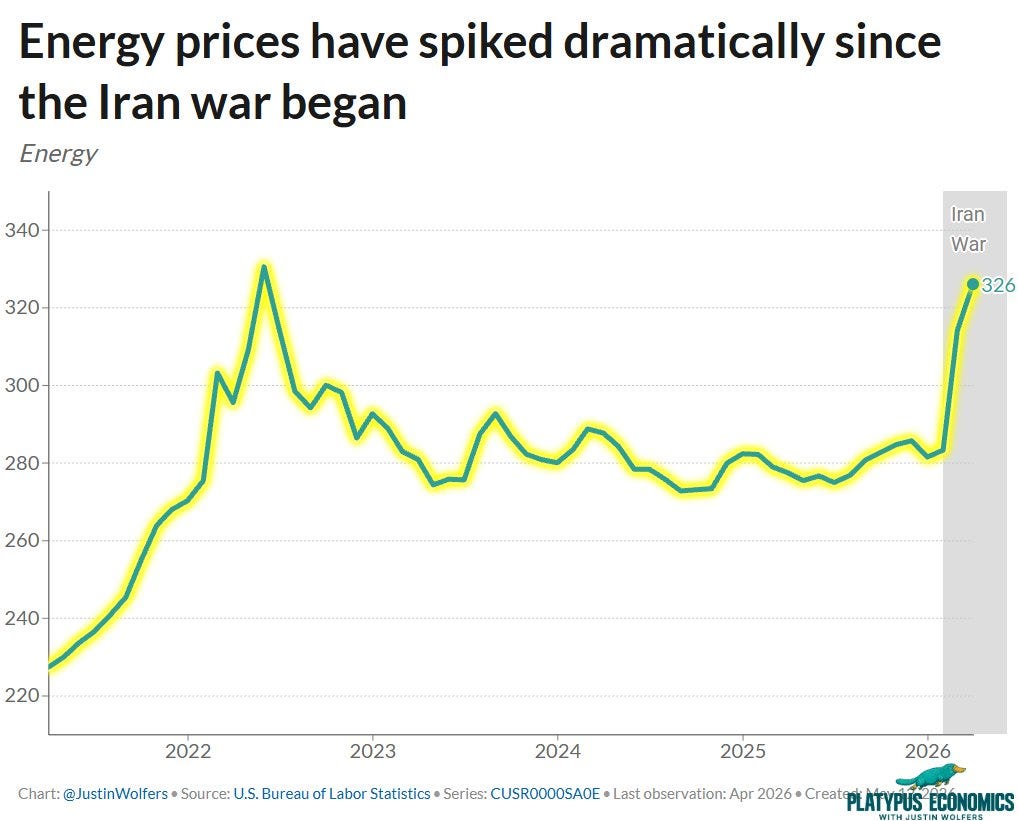
Much of this can be blamed on the war with Iran, and the resulting spike in energy prices at home and abroad. Keep in mind, energy prices — compared to pre-war projections — are expected to remain high for years to come. When prices rise, they contribute to inflation. When they stay high, you still feel it, but it no longer contributes to inflation, which measures the change in prices.
Core inflation (which strips out food and energy) is also up 2.8% over the year — well above the Fed’s 2% target. (Both core and headline CPI tend to run hotter than the PCE deflator the Fed targets, so this may overstate the gap.) While core inflation strips out the direct cost of energy, it’s not entirely isolated from the effects of the war — oil is an input into pretty much everything we make, not to mention necessary for transportation. So a rise in oil eventually gets passed through to these goods as well. These ripple effects will be a central story over the next few months.
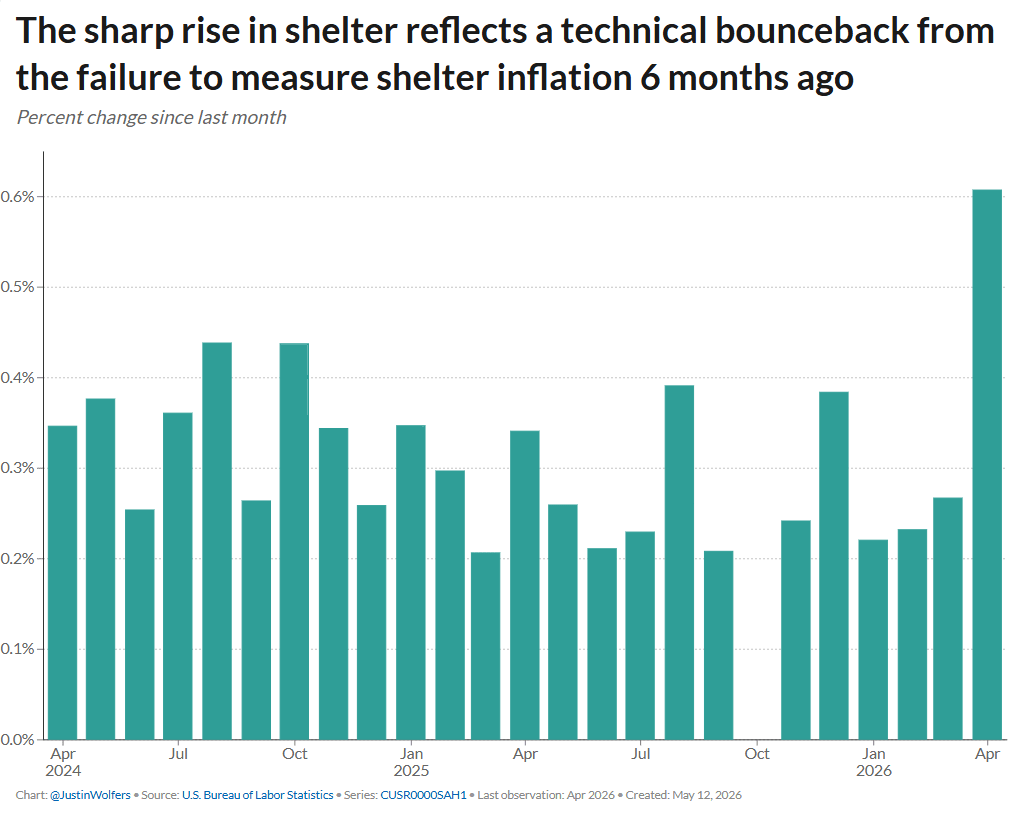
One caveat to these numbers: they include a steep rise in shelter inflation. This is mostly a technical issue — six months ago we were in the middle of a government shutdown, and shelter inflation couldn’t be properly measured. Today’s shelter number is “catch up” from it being artificially depressed in October. There’s a lot of weeds to dig into, but the bottom line is that measures of year-ended inflation are back to being reliable after having been understated for a few months.
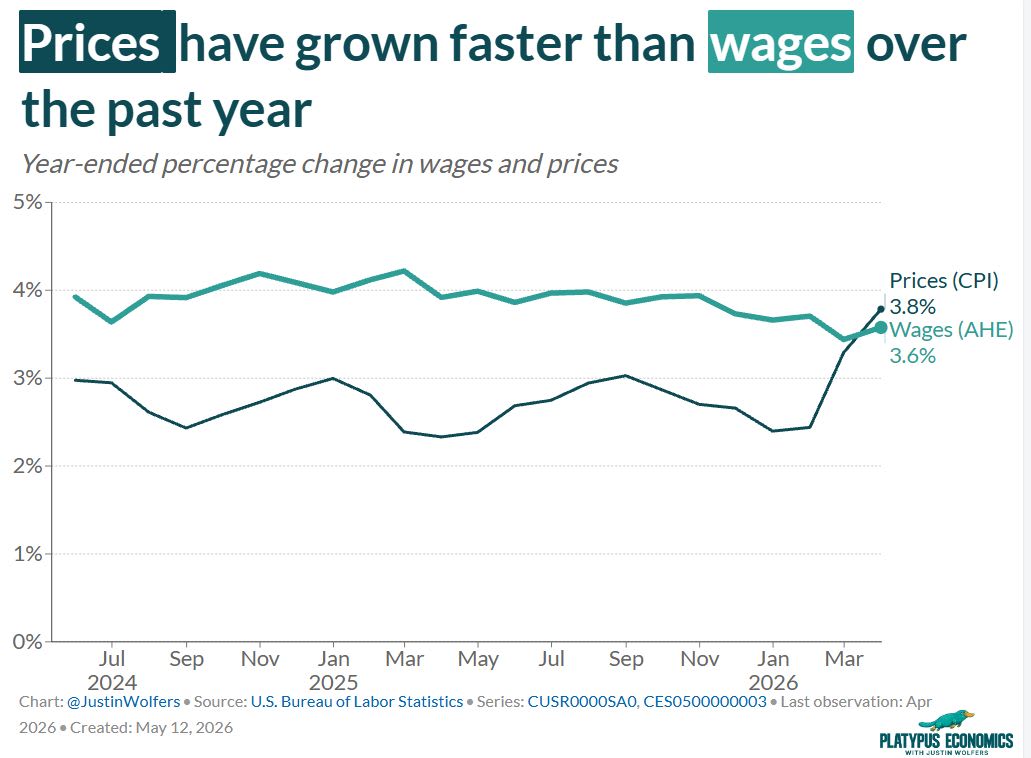
But probably the biggest takeaway is this: over the past year, price-growth has exceeded wage-growth.
That means real wages (which account of inflation) have actually declined.
Trump campaigned on bringing down the cost of living “starting on day one.” Apparently this crusade meant: starting a trade war, deporting much of the farm workforce, bombing Iran, allowing healthcare subsidies to expire, cutting food assistance, running an interest-rate boosting deficit, and attacking fed independence.
Expect the following graph to get a lot of attention over the next few months:
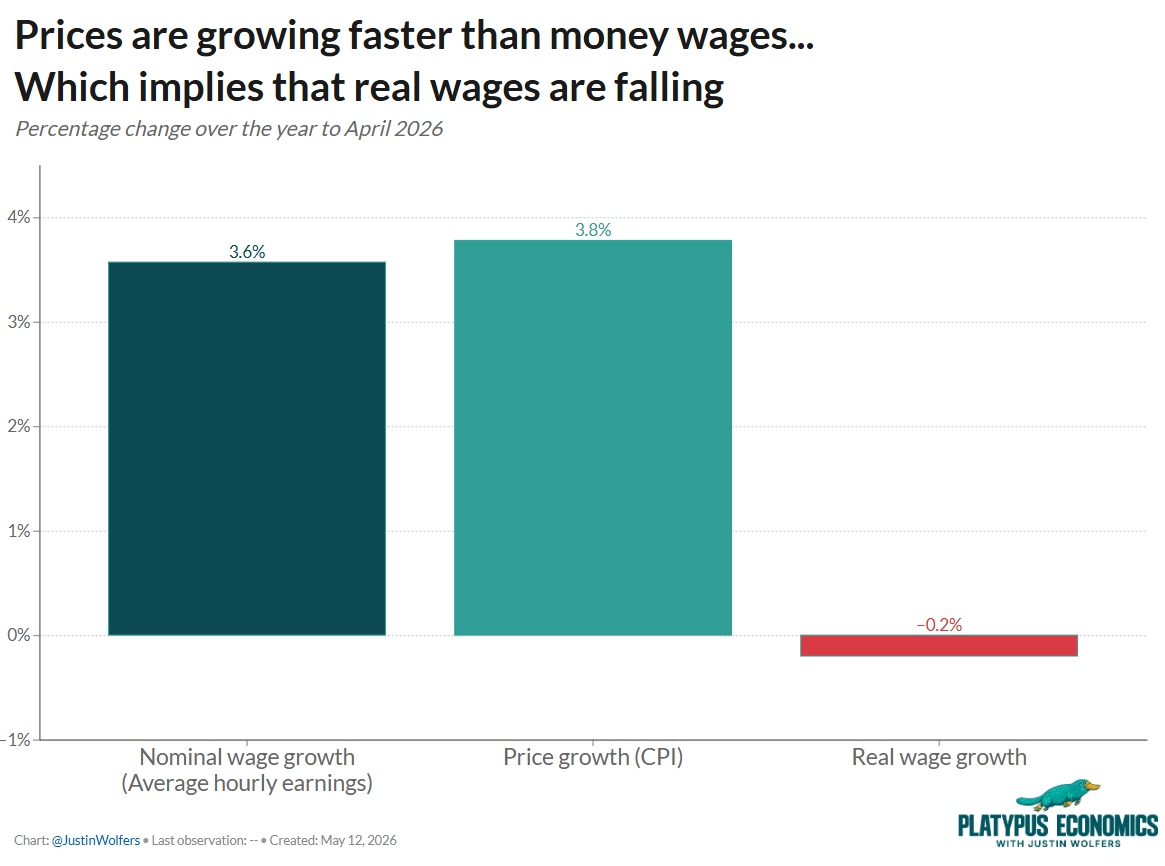
Charts! Graphs! Yay! Real wages are falling. Booo....
Can you comment on how to construct a better monthly tracking measure of affordability for everyday Americans? I’ve long been annoyed at both GDP and the stock market, neither of which actually measures affordability—esp. the combination of food, housing, energy, and other basic necessities for a decent life. If we manage what we measure, we need to measure what matters. Building such a tracking measure would be a huge public service.