


Eyes wide open: Today’s post was created in partnership with DeleteMe. What follows is my true economic analysis, but it’s important to know that DeleteMe is an industry player who profits when you buy its solution.
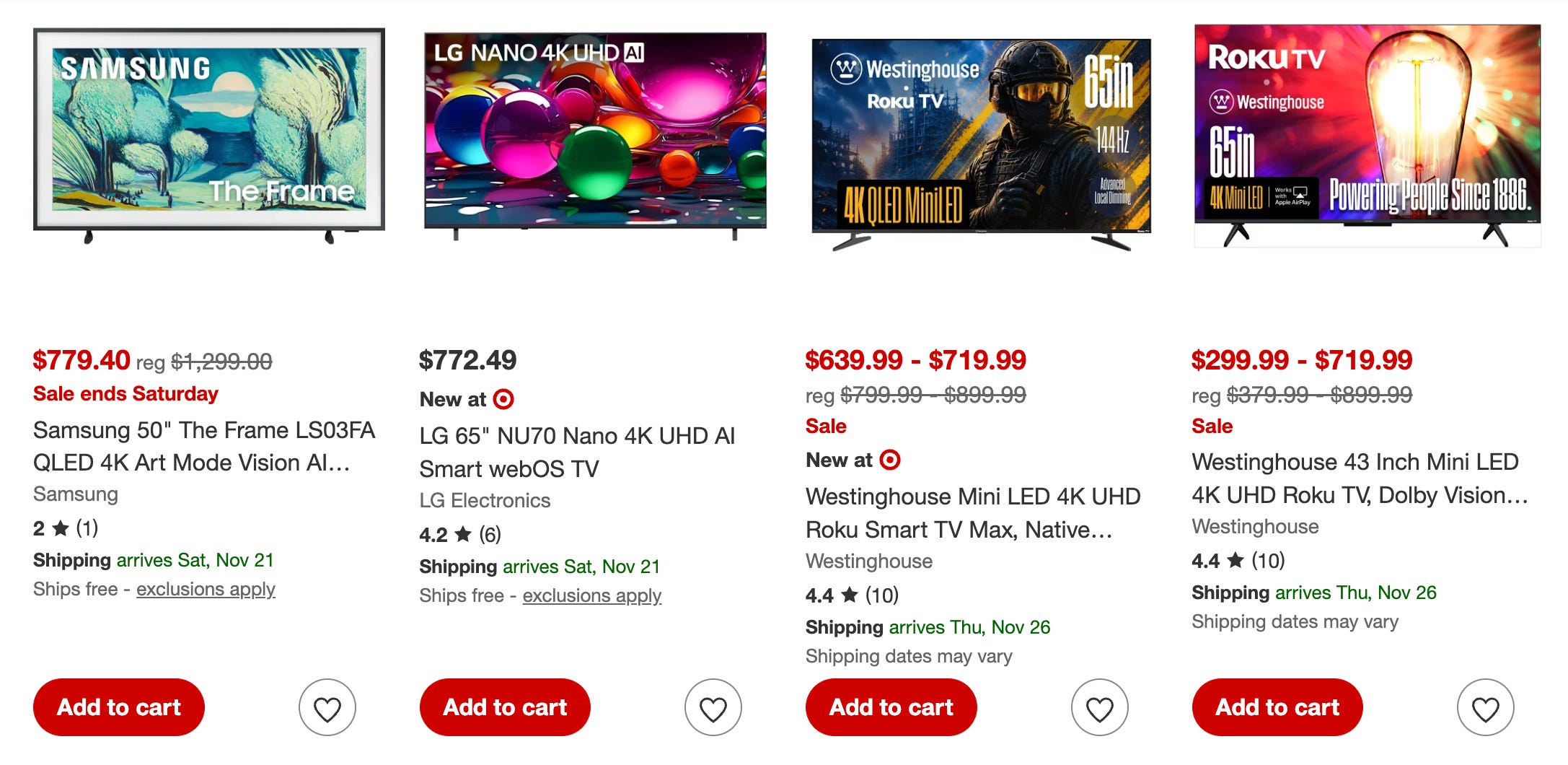
Imagine, for a second, that you’re shopping for a new TV. Maybe you’re hoping to get a big one that everyone can gather around for the holidays. You know your neighbor bought a giant TV for $800 recently, but after a little thinking, you decide the most you’re willing to pay is $600.
You look around online to see what’s out there. The TV you want is on sale at a big-box store near you—for $499.99! That’s even less than you expected. You drive to the store and pull up the website on your phone to make sure you’re getting the right model. But when you check now, something is different. On the website—and in the store—the TV costs $599.99. It’s a cent less than you wanted to pay, and $100 more than you were advertised before.
The economics of getting a deal
In economics, there’s a strategy known as “price discrimination.” It’s the practice of charging different prices to different people based on how much they’re willing to pay. There’s a few different ways to do it.
In some cases a business charges you a different price because you’re part of a group, such as discounts for students, senior citizens, or military veterans. These are different prices based on who you are. A different approach bases the price you pay on what you do. Train companies may charge different prices for those riding at rush hour (peak fares) vs weekend or evening riders (off-peak fares).
Businesses love to tailor their prices. The goal of any of these strategies is for the seller to get the most they can out of each of their customers, and also to offer specific discounts to get low willingness-to-pay customers. It all works neatly in theory. In practice, no business knows exactly how much you’re willing to pay.
So they get sneaky, and sometimes they do it in ways that hurt you.
Let’s think back to our example with buying a television. On November 12th, the New York City Council voted to ban “surveillance pricing.” That follows a ban in Seattle in September; Connecticut, Maryland, and New Jersey each have their own laws too. Companies have a lot of information about you. Your zip code gives them a clue to your income. The phone you shop, your browsing history, and your purchase history—all contain clues about how much money you spend and what you like to spend it on.
In early 2025, the Federal Trade Commission released their preliminary findings on pricing tools. They found that those tools can draw information based on your location, demographics, browsing history, and even how you move your mouse on a webpage.
That is surveillance pricing. It’s an attempt at more effective price as sellers try to get inside your head.
Our hypothetical TV shopper was willing to pay $600 and ended up with a $599.99 TV. Economists call the gap between what you pay and what you’re willing to pay consumer surplus. You get something good because something was chapter than you thought. At $499.99, you would have $100.01 of surplus; at $599.99, you get a penny.
Price discrimination isn’t all bad. Personalized prices can mean lower prices for people who’d otherwise be priced out.
But for buyers who are stuck paying a higher price, it all feels pretty painful. The problem is information: the seller knows a lot about you, and you have no idea what your neighbor was quoted. You can’t comparison-shop against a price you never see.
So what can you do?
So far, these laws are a patchwork, and they’ll go into effect unevenly. But you control one lever: the information. That’s the input companies need.
When a seller can’t tell its customers apart, everyone gets lumped together, and everyone pays the same price. And that’s the case for shrinking the file of available information: you’re in the big pool with everyone, and you’re able to look around for the best deal, without the process of looking changing how much you pay.
Data brokers are a big part of how your profile gets filled in. They match your address to your age to your relatives to your shopping habits. Then they sell the whole package. The buyer uses that info to personalize the price they charge you.
DeleteMe searches hundreds of data-broker and people-search sites for your information and files removal requests for you. Then it keeps checking, because the listings come back. Wirecutter ranks it the #1 data-removal service.
I’ve been using DeleteMe myself, and the reports are eye-opening. It’s removing my data from the internet over and over again, which gives me confidence that I can comparison shop in peace this holiday season.
If you want to keep your consumer data private, go to joindeleteme.com/wolfers. Use the code WOLFERS for 20% off any consumer plan. That’s the same discount, no matter who you are.
OK I'm more amenable to an advert when it comes with a rational explanation. Jumpy music with dancing platypodes dressed in cheerleader outfits would be fun tho
Seriously, I've only heard DeleteMe touted as a way to reduce promotional & spam email. Never thought would be worth a dime cuz I can unsubscribe from emails from any legit company... which seems to me would be the very companies that participate with DeleteMe, while all the 'real' spam (foreign royalty trying to give me millions, fake account alerts from banks & services I don't use...) - the scammers & hackers aren't cooperating with DeleteMe, which is basically ALL my spam.
price discrimination - now you've got my attention. I understand this is the new thing that AI can contribute to our civilization until maybe one day it works out that cure for cancer. I'm assuming that's not gonna be given to us for free either... but prolly won't come with Justin's gift link. So at least I'm gonna think on this.
Good marketing approach for your audience, I think
Last week I put something in my Target iPhone app cart, went to check the price at WalMart, and when I switched back, Target put a small discount on it. Didn’t buy until the next day, and the discount disappeared.