



The Federal Reserve did exactly what everyone expected on Wednesday. It held rates steady at 3.5% to 3.75%. Markets had priced that outcome with complete certainty. So if you stopped at the headline, you missed the meeting.
What mattered was not what the Fed did. It was what we could suddenly see more clearly about what comes next.
I spied three important threads.
War killed the easing cycle
First, markets now expect a lot fewer rate cuts than they did before the Iran war. That’s not because the Fed told us much directly about the future — this wasn’t a dot-plot meeting, and Powell was careful not to make promises. It’s because the war, the oil shock, and the inflation risk have changed what traders think the Fed will be able to do.
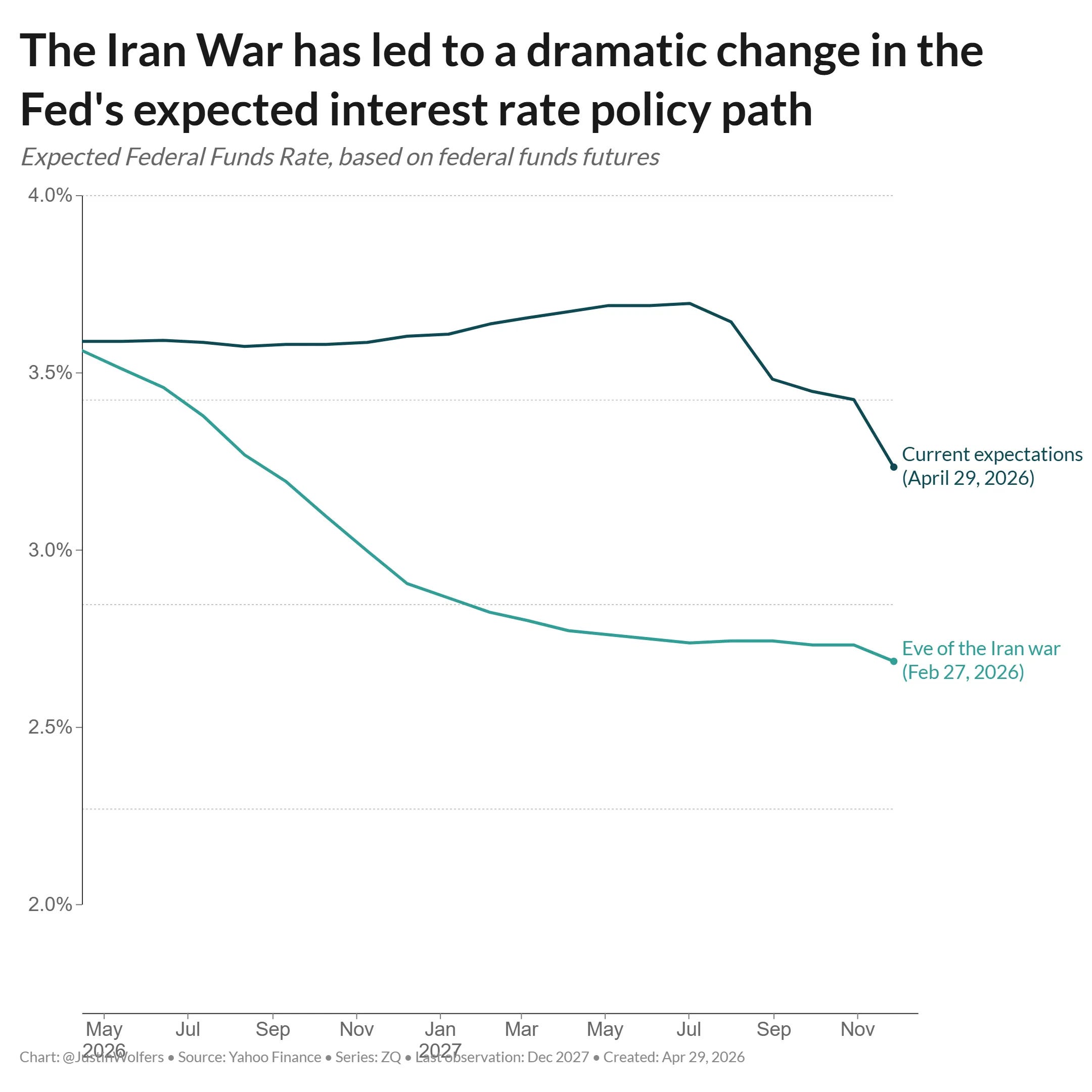
On February 27 — the eve of the Iran war — markets expected the Fed to continue cutting rates this year and into 2027. By April 29, a lot of those expected cuts had vanished. The simplest way to say it is that the war seems to have killed the expected easing cycle.
Here’s why. Powell’s real concern wasn’t just that oil got dearer. Central banks can often look through a temporary energy shock. The bigger problem is what happens if higher oil prices start to seep into inflation expectations. And on that point, Powell was pretty direct: “near-term measures of inflation expectations have risen this year,” and he’s worried about what might happen to longer-run expectations.
That’s a wonkish distinction. But it matters a lot. If gas prices jump for a month, the Fed can often live with that. But if folks start to expect inflation to stay hotter for longer, then a rate cut starts to look risky. That’s how a war in the Middle East can end up keeping your mortgage rate higher in Michigan.
And then there’s tariffs. Powell said core inflation is still running high and “largely reflects the effects of tariffs on prices in the goods sector.” Notice: He’s prepared to state truths out loud that the President would prefer not to hear. (In contrast to some.)
For months, the Fed had been operating on the view that tariffs would cause a one-time bump in prices and then fade from the inflation numbers. They’re still waiting to see that happen. So now the Fed is staring at one supply-side inflation shock that hasn’t fully passed through, and a second one — from war and energy prices — landing right on top of it. That’s a nasty mix. A bloke walks into the policy room, sees one rake on the floor, and then another.
Powell put it pretty plainly: they’d want to see the “backside” of the energy shock and progress on tariffs before they’d even think about reducing rates. Not a promise. But a very clear statement of the bind they’re in.
A Fractious Fed
Second, the committee looks more fractured than the headline made it seem.
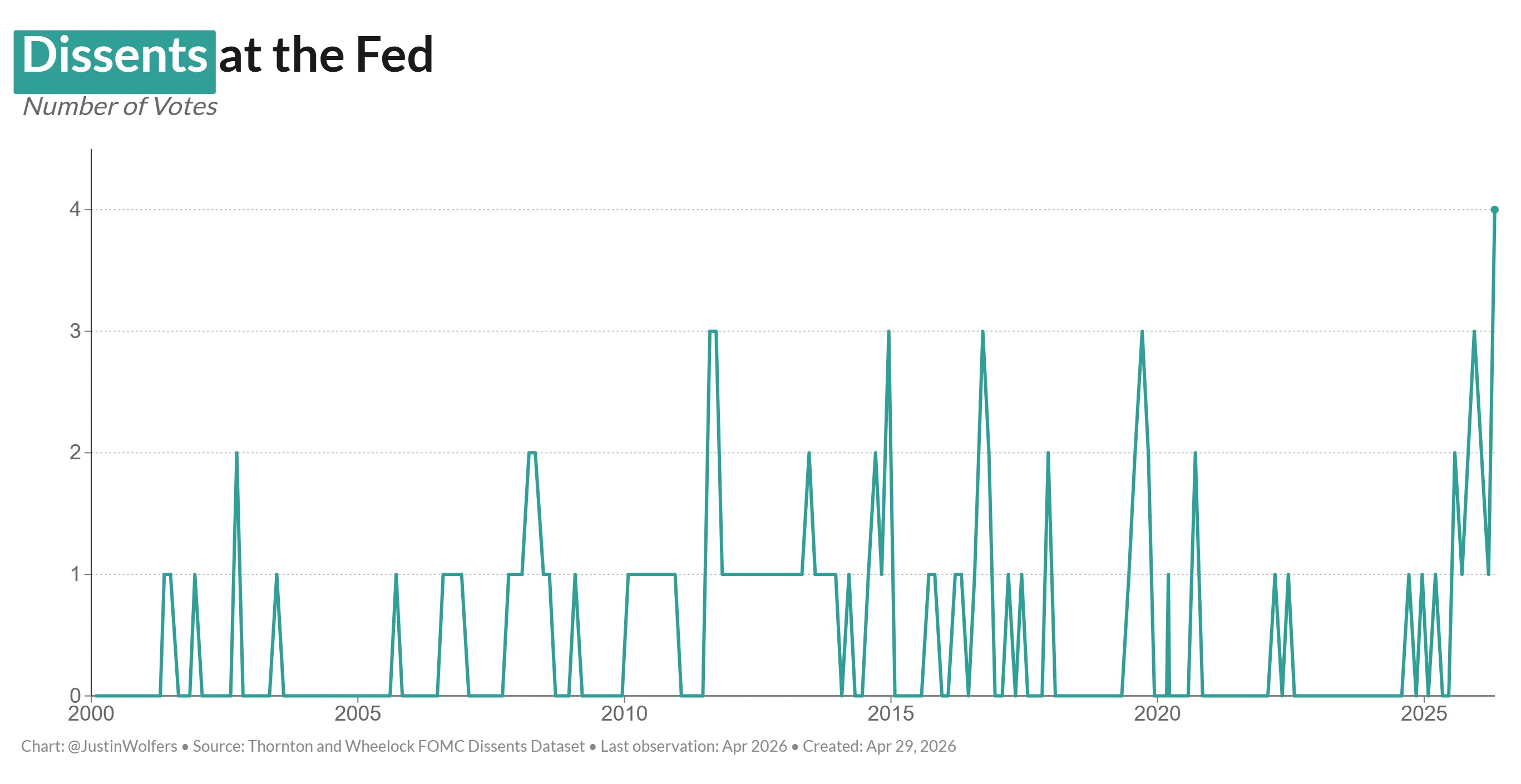
The vote was 8-4. One dissenter, Stephen Miran, wanted a quarter-point cut. Three others — Beth Hammack, Neel Kashkari, and Lorie Logan — agreed with holding rates steady but objected to the statement’s language because they didn’t want it to sound as if the Fed still leaned toward cutting.
Powell said there had been a “vigorous discussion” about that language, and that support for a more neutral stance had increased since March. That tells you enough. The room is getting harder to hold together.
Powell stays to defend the Fed
Third, Powell told us something about the institution itself.
In his final press conference as chair, he said that after his term ends on May 15, 2026, he will remain on the Board “for a period of time, to be determined,” and keep “a low profile” as a governor. He tied that decision directly to what he called “legal attacks on the Fed,” which he said threaten the institution’s ability to make monetary policy without political influence.
I don’t want to oversell that. But I also don’t think it’s subtle. Powell is telling you this is not a normal handoff.
TL; DR
So yes, the Fed held rates steady. But that wasn’t really the news. The news was that a war has made cuts less likely, the committee is finding it harder to agree on the path ahead, and Powell is acting like the institution itself may need defending.