


I joined Ryan Grim at Drop Site News recently to talk about three wars the administration is fighting on three fronts: the Canadian trade war, Bessent’s fight with the bond market, and a real war with Iran.
Personally, I’d hold those as three separate briefings at three different times of day. But they’re connected: the people running them all report to one bloke, and the bloke is something of a chaos monkey. Different wars, different chaos, same monkey.
Ryan started with a question I get all the time: amongst the chaos, how is the American economy doing? My answer: it’s the little engine that could. Despite many dire predictions, nothing has knocked it off track in a long time — yes, COVID is an exception. A global pandemic will stop anything.
But that’s not the whole story. This administration promised growth was about to explode, and it keeps saying that growth of four or five percent is coming “next quarter.” Yet next quarter never arrives.
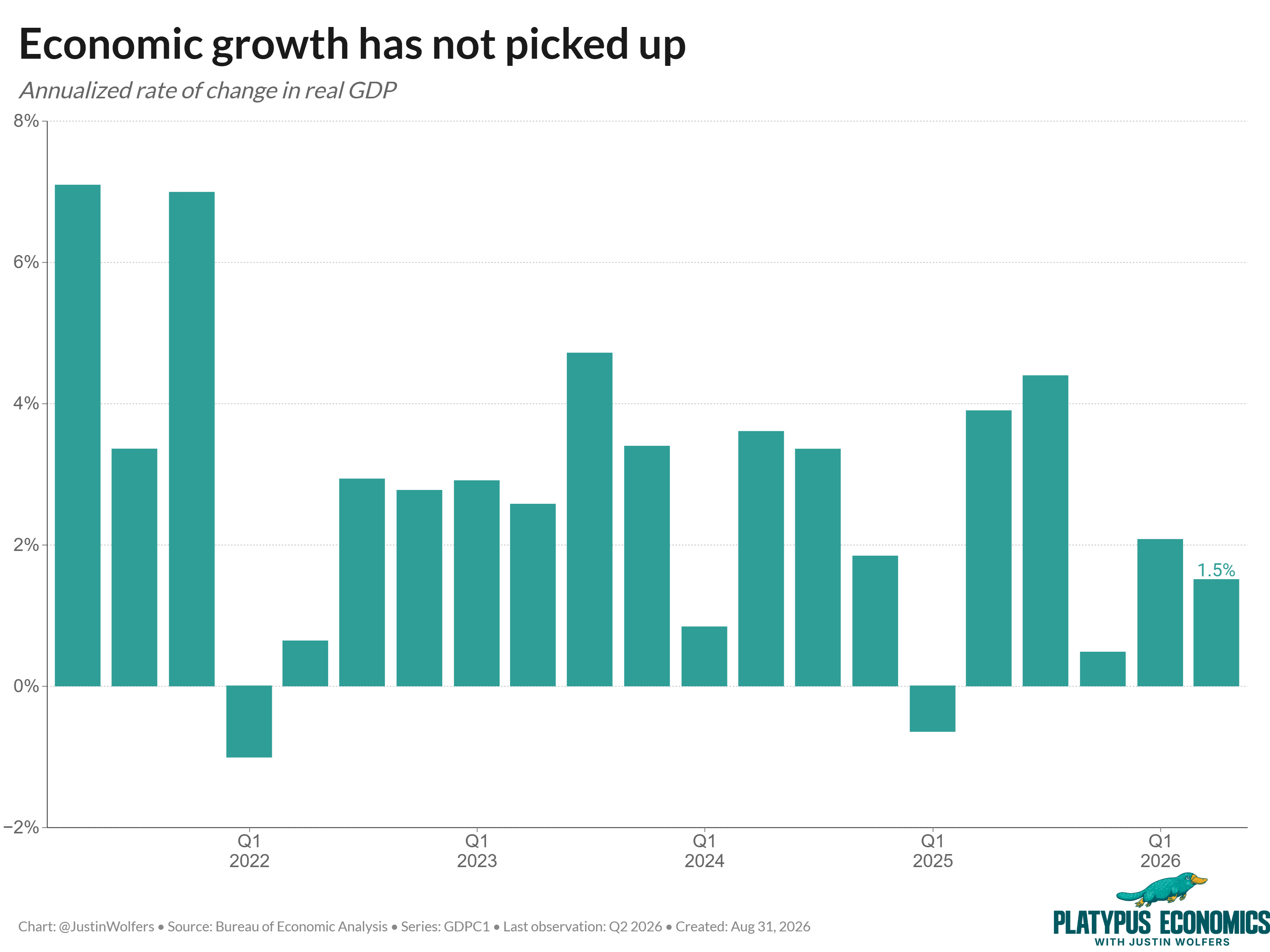
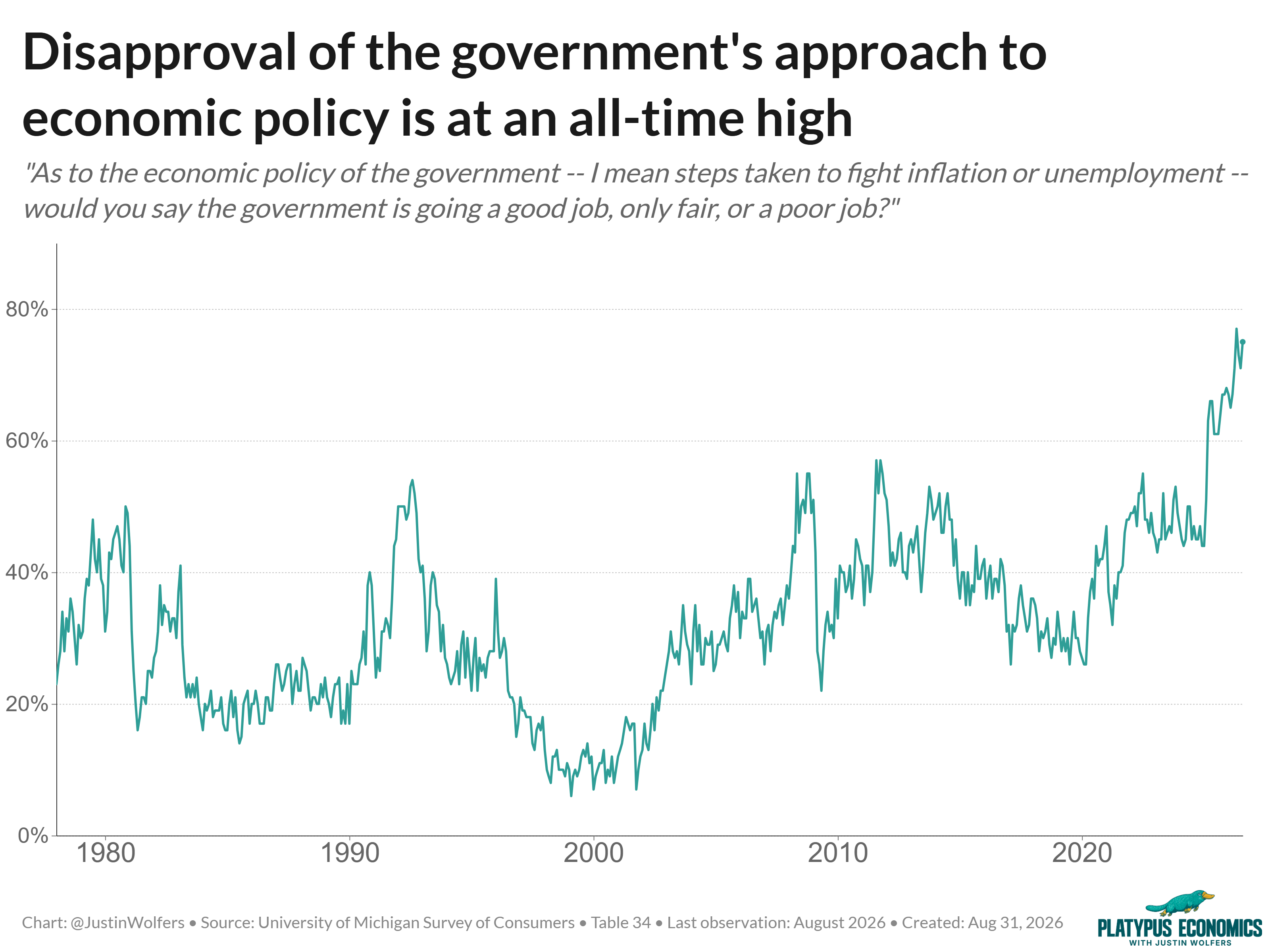
I’m a generous grader, so I’ll call the little engine that could a B+. But I’d grade the policy considerably lower. Apparently so do the American people.
Onto the trade war: I made a simple point that I think is often overlooked. The sheer size of your economy — total GDP, if you like — isn’t the same as leverage. If you're trying to throw your weight around, what matters isn't how rich Americans are — it's how much we trade with everyone else. And the United States is a remarkably closed economy. We do enormous amounts of trade, but a lot of it is between California and Texas. On the global stage, we’re big, but shy (at least relatively speaking). Canada is the opposite: small, but very open, which is why shutting its spigots would be felt everywhere.
America’s real exceptionalism lies elsewhere. It’s in the dollar sitting at the center of the world's financial plumbing, and in the fact that most of the companies that will shape the next thirty years are headquartered here.
I also pushed Ryan away from one line of thinking about the Fed. Whether rates move a quarter point up or down in September is not the story. Instead, we need to focus on whether our central bank is in good hands, and if its strategy is coherent. We now have a chair, Kevin Warsh, who has said he won't share his forecast or explain how the Fed will respond to future conditions. Silent Kevin says he'll simply listen to the bond market. Of course, the bond market is still listening to the Fed, but what it’s hearing may now be more static, and less signal. This new approach to the Fed — of less communication, less transparency, and less accountability — has drawn bad reviews up and down Wall Street, and not for partisan reasons.
Ryan also wanted to know where the real vulnerability is. Oil probably isn’t going to shock the economy into stagflation, because this isn’t a rerun of the 1970s. Back then, the United States imported huge amounts of oil. Now we’re energy neutral — actually, we’re tipping towards being exporters. If you want to worry about the American economy depending too heavily on one sector, the sector to worry about is AI.
Ryan’s last question was whether there’s some number at which the economy simply cracks. It’s human to believe such a number exists. But I offered something different. Economists are superb at identifying recessions — roughly six to eight weeks after they’ve begun. We’re nearly useless before. So if someone tells you they can see the next one coming, you may be talking to a genius. But in my experience, overconfidence is far more common than genius.
You can tune into our full conversation above, or here.
Once again you cite reality. Unlike the cosplay wannabes at the helm. I follow you, Paul Krugman, other economists. Turn off the wannabes like donnie, bessent, warsh. He only knows how to sink a ship! And they bail water for him.
Thank you Justin. You are a good teacher.👏🏻